SPRINGFIELD, Ga. — Blended families do not come together neatly. There is no ribbon-cutting ceremony, no instruction manual, no magical moment when everyone agrees on bedtime, screen time, or whose turn it is to unload the dishwasher. Instead, blending families feels more like learning to drive a car while passengers argue over the radio.
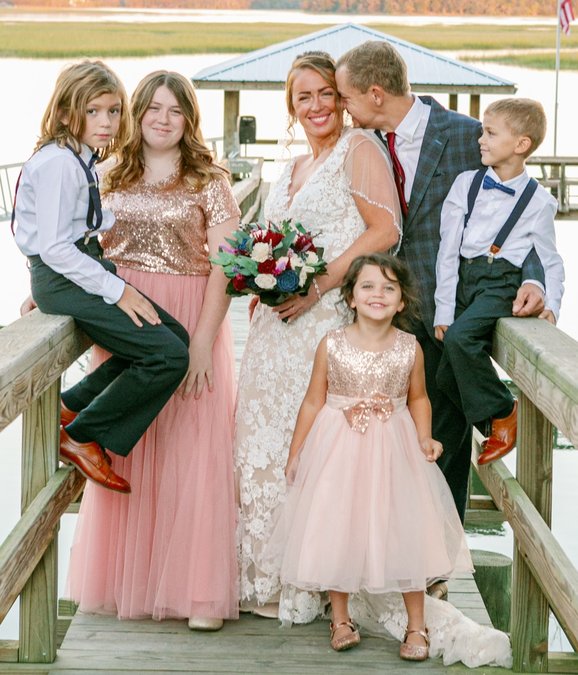
I know this firsthand. My husband and I merged our households, bringing together my two daughters and his two sons. Every day has been a lesson in patience, compromise, and love. Some lessons come gently. Others hit in the kitchen at the end of a long day, when something as small as socks on the floor becomes a family debate.
Through our own blended family, I’ve learned that love expands in ways you don’t expect, chaos is part of the process, and family is built one conversation, one compromise, and one shared laugh at a time. These lessons are not unique to us, but they are hard-won—and they shape how we show up for our children every day.
Step-Parenting Is Love and Logistics
At its core, step-parenting is love mixed with logistics. It’s learning how to care deeply without overstepping, support without replacing, and build trust with children who already had a full life before you entered it.
One of the first lessons blended families learn is that different rules can exist under the same roof. At one house, bedtime might be firm; at another, flexible. Some kids grew up with chore charts and consequences. Others grew up with vibes and verbal agreements. When those worlds collide, confusion is inevitable. You may find yourself explaining why socks belong in the laundry basket while quietly reminding yourself that this is not the hill to die on.
Communication Is Key
Blended families require adults to communicate in ways they never had to before. You are no longer just parenting your own child; you are coordinating with another household, another schedule, and often another adult who loves the same children just as much as you do. Co-parenting requires patience, restraint, and the ability to pause before reacting—especially when everyone is tired.
Step-parents walk a careful line. You want to help, guide, correct. But authority is earned slowly. There is a difference between being involved and being intrusive, and learning that difference can take time. Some days you feel like a bonus parent. Other days, like a referee who was never given a whistle.
Redefining Siblings
Then there are the many variations of siblings. The world likes to label children as siblings only if they share both parents. If not, the labels change: half-sibling, step-sibling, or sometimes not sibling at all. These words may make sense on paper, but they rarely fit real life.
In a blended family, children share meals, holidays, inside jokes, and memories. They grow up together. They argue, protect each other, and compete over the same bathroom mirror. They sit in the same back seat and fight over the same charger. They are siblings. Full stop. And if you try to correct one of my children for calling their siblings anything else, just know mama bear is not far behind.
Language matters. How we talk about family shapes how children see themselves and each other. In our house, the girls are sisters, and the boys are their brothers. Anything else feels unnecessary. Family is built through shared life, not fractions.
Respect and Boundaries
Step-parenting also means navigating respect—especially toward the children’s other parent. There are moments when naming your role as a step-parent is less about distance and more about honoring someone else’s place. Even when that courtesy is not always returned, many choose the high road anyway—not because it is easy, but because children are watching.
Blended families also redefine traditions. Holidays may be split. Birthdays might be celebrated twice. Family photos may look a little different every year. And that is OK. Love does not require everything to look the same. It requires effort and intention.
Humor helps. A lot. Sometimes laughter is the only thing that keeps a small misunderstanding from turning into an argument over whose weekend it was or who forgot the soccer cleats.
The Quiet Work of Step-Parenting
What often goes unspoken is the emotional weight step-parents carry. Loving children who are not biologically yours can be deeply rewarding, but it is also quiet work. There are moments when you show up without recognition and trust that consistency matters more than credit.
The chaos does not disappear. It changes. Schedules shift. Children grow. Roles evolve. Somewhere along the way, what once felt overwhelming begins to feel familiar—not perfect, not easy, but real.
Building Family One Step at a Time
In the end, blended families are built the same way all families are built: one conversation, one compromise, one shared laugh at a time. And while the road may be bumpier, the love that grows along the way is no less real.
— Lauren Eargle is a wife, mom of four, Springfield City Manager, and co-owner of Revolution Cycle and Fitness. She juggles city hall, spin classes, and the daily chaos of raising her kids in Effingham County—sometimes all before breakfast.