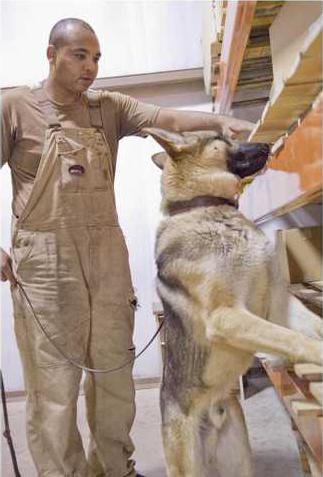
LACKLAND AIR FORCE BASE, Texas — It can be a terrifying thing to see a dog streaking toward you across a field, fast and low to the ground, lips peeled back from a mouth filled with huge white teeth. But for the son of a Rincon couple, all he can think about, as the 80-pound animal leaps toward his arm, is making sure the dog gets a good bite.
Force Staff Sgt. Anthony Perkins, son of Arthur and Ada Davis of Rincon, is a military working dog trainer with the 341st Training Squadron, the largest canine training center of its kind in the world.
The Department of Defense Military Working Dog Center has courses that train both new dogs and new handlers to work together as sentries and bomb and drug sniffers. The human students spend 11 weeks working with veteran dogs learning how to control and understand their future canine partners. The new dogs work with veteran handlers to learn patrol work and to recognize the scents of drugs and explosives and the behaviors that will tell their handlers they’ve found something.
“We train military working dogs for the Department of Defense to ensure that we have mission-ready dogs that are trained in the detection of explosives and narcotics, as well as suspect detainment,” said Perkins.
The four-footed students at the center learn to identify the scents of a wide variety of explosives and drugs, many of which are odorless to humans. The dogs also learn how to patrol and are taught “controlled aggression” — when it is and is not appropriate to bite a human and to let go of someone they have bitten, on command and with no hesitation. For Perkins, and others at the center working with canines is a completely different military experience.
“To me, this is the best job in the Air Force. What I enjoy the most is the adrenaline rush and knowing the dog I trained could possibly save a life,” Perkins said.
Human students at the school learn the basics of their future partners including safety procedures, managing health, the gear they will be using, general record keeping for the animals and the principles of behavioral conditioning.
Then they begin to work with the dogs, learning basic obedience commands for the animals, how to control the animals, procedures for patrolling and searching an area and how to perform as a decoy to keep a working dog in top form.
“These dogs serve as a psychological deterrent, along with protecting our military personnel, resources, and equipment,” said Perkins, who as served in the Middle East three times, including a tour in Iraq.
Perkins understands that facing ferocious attacks, hammering in constant commands and providing frequent praise will one day pay off with human lives saved on the battlefield.