By Barbara Augsdorfer, Editor for the Effingham Herald
The memorial wreath-laying ceremony at the African American cemetery adjacent to Jerusalem Lutheran Church, 2887 Ebenezer Rd. in Rincon, is becoming an annual event, but Leroy Lloyd is hoping it becomes something more. “It’s ‘Funding for the African American Cemetery at Ebenezer’,” Lloyd said. Lloyd is a past president of the Effingham NAACP and has the organization’s support in restoring the cemetery. Lloyd added, “Any funds the Effingham NAACP collects for the cemetery will go toward upkeep, maintenance, and possibly an obelisk to memorialize the approximately 250 formerly enslaved people who are buried there in unmarked graves.”
For the past few years, Lloyd and members of the Master Gardener’s Association have worked to clean up the cemetery along with Jerusalem Lutheran Church, community volunteers, and local businesses who’ve donated materials or services. Lloyd says he’s hesitant to name names because he doesn’t want to leave anyone out.
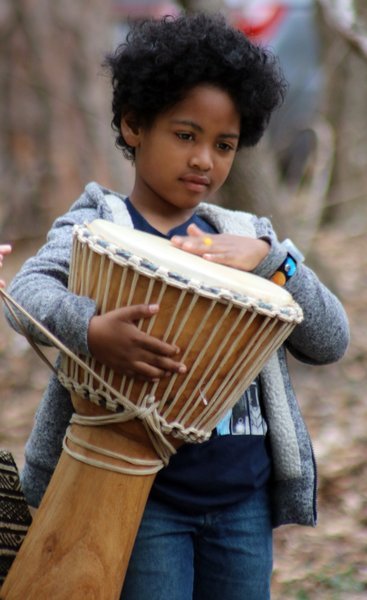
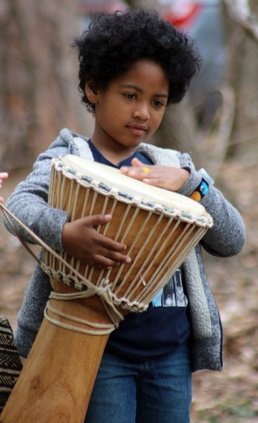
This year’s memorial will be held Saturday, Feb. 25, beginning at 2 p.m. The hour-long ceremony will include prayers and traditional African music, with Deacon Willie Wright from Eden Baptist Church as the main speaker. Lloyd said that chairs will be provided for attendees and people should arrive before 2 p.m. so the ceremony can start as scheduled.
The wreath-laying ceremony honors the lives of formerly enslaved people, who on Dec. 9, 1864, drowned trying to cross Ebenezer Creek to avoid capture by the Confederate Army during Gen. Sherman’s “March to the Sea”.
The large group of formerly enslaved people were told to let the Union Army cross over the creek on a hastily constructed pontoon bridge. After the last of the Union soldiers was across, Union Gen. Jefferson C. Davis (no relation to the Confederate president of the same name) gave the order to destroy the bridge. According to “Ghosts of Ebenezer Creek, Georgia,” “As instructed, the slaves stood silently and waited for their turn. However, as the Union troops crossed, Confederates opened fire. In the darkness, it was unclear as to where the Confederates were stationed. Davis feared that the enemy would use the bridge as a means for attacking his troops from the rear. And so, as soon as the last of his men were safely across, Davis ordered the bridge destroyed.”
Fearing capture and return to slavery or being shot on the spot by Confederate soldiers, the formerly enslaved – men, women, and children -- began jumping into the creek trying for freedom. The near-freezing water was more than ten feet deep and many of the formerly enslaved drowned. According to reports, a few Union soldiers defied orders and tried to hastily reconstruct a bridge by felling trees, to no avail.
Lloyd recounts that he’s always been interested in preserving African American gravesites – many of which are poorly maintained, if at all. He was especially intrigued by the Ebenezer site. “It appeared to me that that that was something luring me back to this place,” he said. “It is a very peaceful place and (I felt like the) ancestors were calling me to this place to do something about it.”
In the near future, Lloyd wants to do more for the ancestors who are calling. “We also want to locate and mark the graves,” he said. “We had an archeologist who did the ground-penetrating radar (that) initially indicated there are about 200 different graves in the site. So we want to get that ground penetrating radar again, and mark the graves. And that would cost around $2,000.”
It may be impossible to discover the names of the people who are buried there, but at least their memory can be honored.
“We honor the people who drowned in the (Ebenezer) creek and we honor the people who are buried here because they were enslaved in this area,” Lloyd said.
Community members who would like to volunteer to maintain the cemetery may email Lloyd at lrlloy@planters.net. Monetary donations can be sent to: African American Cemetery, P.O. Box 430, Guyton, GA 31312.