RINCON, Ga. – A year after a half-billion-dollar package was approved, a regional water infrastructure project transforming southeast Georgia’s water supply is moving forward.
About $500 million was allocated in March 2025 to Bryan and Effingham counties and the City of Savannah for upgrades to existing treatment plants and construction of a new intake along the Savannah River. The largest share will fund a new surface water treatment plant in Effingham County that will treat water drawn from the river.
Savannah has long led the region’s water supply system, but the project positions Effingham County as a major new player.
“This will really change the trajectory of the region when it comes to water supply,” Effingham County Manager Tim Callanan said. “It brings surface water to areas that could only rely on groundwater, so it really protects those groundwater resources and allows us to continue to grow and create jobs.”
Rapid regional growth — especially the Hyundai Motor Group Metaplant America — is driving demand. Much of southeast Georgia falls within restricted groundwater zones, limiting withdrawals from the Floridan Aquifer and making surface water expansion critical.
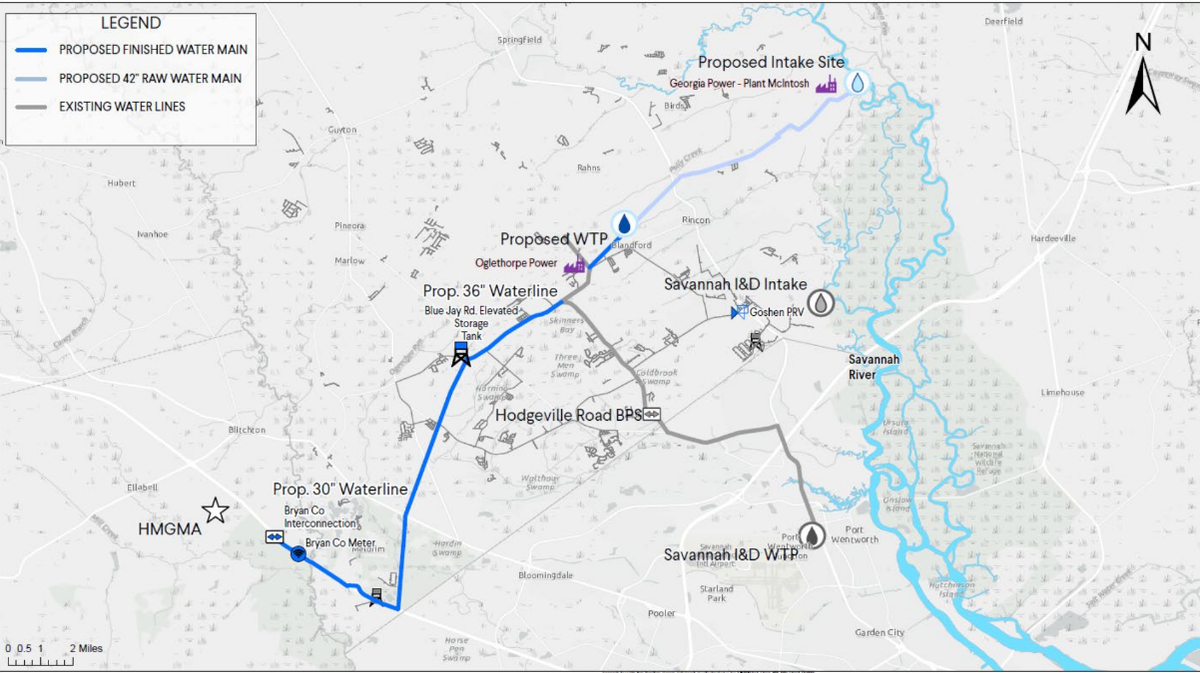
The project is in phase one, which includes upgrades to Savannah’s Industrial & Domestic (I&D) Water Treatment Plant, new transmission lines in Effingham County, and a connection to the Hyundai site.
Savannah’s upgrades are well underway, while Bryan and Effingham counties are expected to begin their portions of the project in the second quarter of 2026.
Phase one is expected to be complete by 2028, with a second phase — including Effingham’s new plant — projected for 2030 to 2032.
“The region is growing, and it is going to become more and more difficult for just one entity to be the provider for the region,” Callanan said. “We’re working really in partnership on this so they (Savannah) can get their capacity expanded and Effingham can get its new capacity going.”
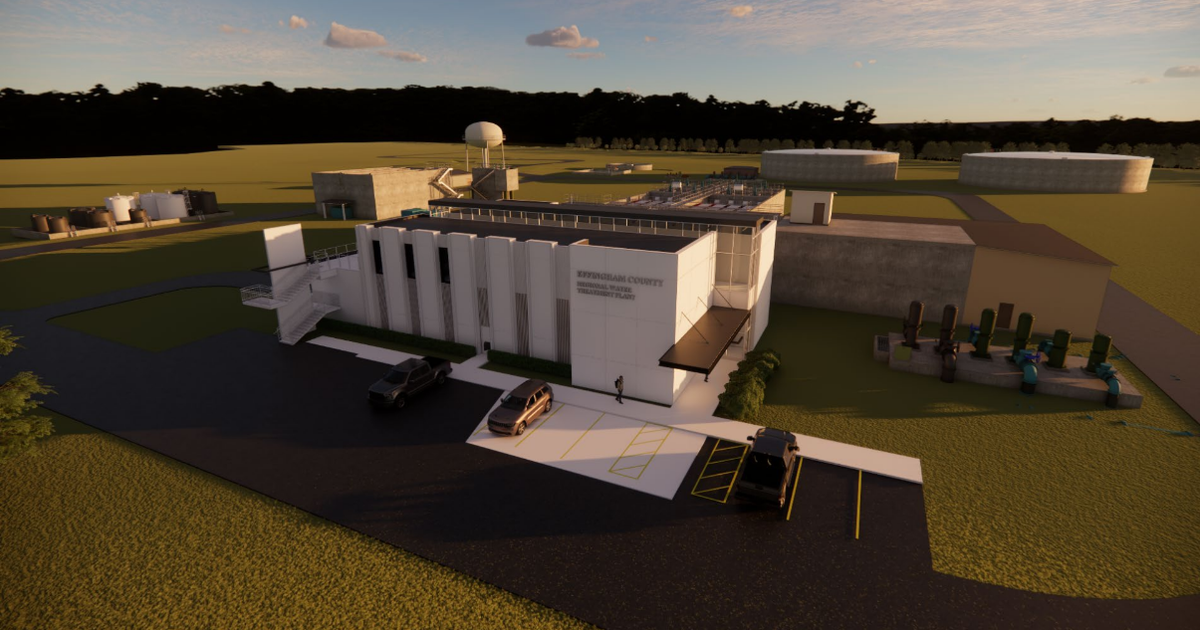
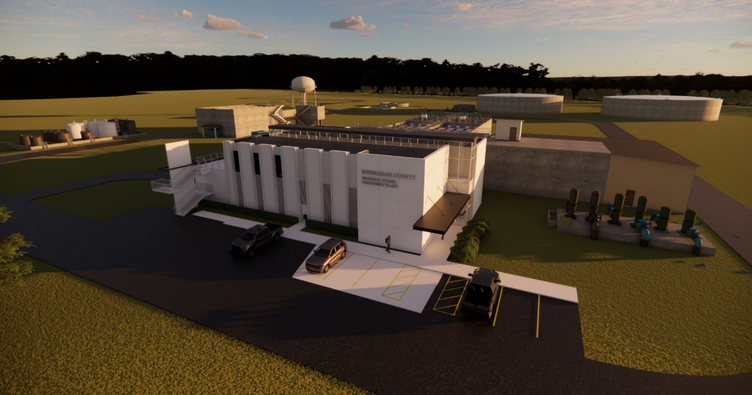
Project breakdown
Callanan said Effingham County’s future surface water treatment plant will allow the county to control its own water supply.
The county has relied on treated water — roughly 3 million to 4 million gallons per day — from Savannah’s I&D plant for decades.
“We will essentially be cutting that umbilical, and we will be providing all of our customers with water produced from our plant,” he said.
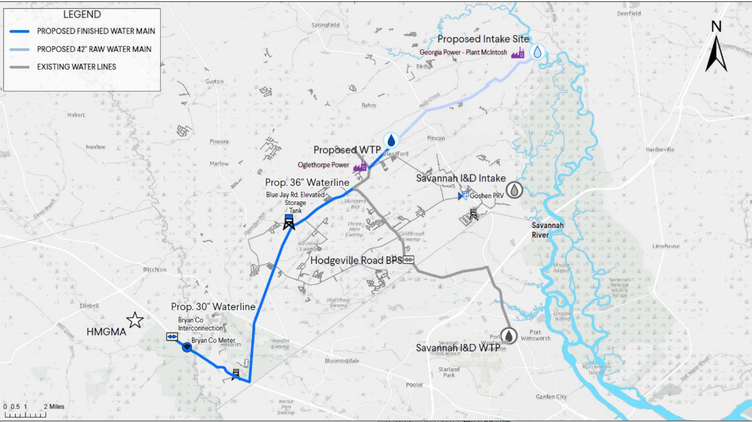
An allocated $319 million will fund construction of a new intake on the Savannah River and eight miles of water line feeding a state-of-the-art surface water treatment plant — only the second of its kind in coastal Georgia. About 18 miles of additional pipeline will carry water to the Hyundai site in Bryan County.
The county is actively acquiring property easements for the pipeline. While much of the infrastructure will follow an existing Georgia Power right of way, one section along Bluejay Road will require additional right of way. Callanan said officials are working to minimize impacts.
In total, about 60 property owners will be affected.
During an Effingham County Commission workshop in March, Callanan discussed inviting affected property owners to a groundbreaking ceremony planned for May.
The plant will be permitted for 23 million gallons per day, with an initial capacity of 12 million and room for expansion.
“If other entities outside of Effingham County need access to supply, and it’s a reasonable cost to connect them to it, we’ll make it available,” Callanan said. “We’re going to be working with partners throughout the region just to make sure that they get adequate water supply at a low price.”
Callanan said Hyundai is a key customer. The Hyundai facility is currently permitted to extract 6.6 million gallons per day from wells in Bulloch County. Effingham County will begin replacing that groundwater supply with surface water as early as 2028. By 2029 to 2030, when the new plant is complete, Hyundai will be fully off groundwater.
“Hyundai makes the economics work on the plant,” he said. “As the volume goes up in the plant, your cost to produce that water goes down. When you start off with a large buyer, you can get your production cost down and be able to sell it to the residential users at an affordable rate.”
New technology
The new facility will incorporate advanced treatment systems designed to produce high-quality drinking water.
“The base goal is to make sure that what we’re producing is superior to anything else out there,” Callanan said.
A major focus is removing PFAS, or “forever chemicals.” Georgia is adopting federal EPA standards that will require public water systems to monitor PFAS and report results by 2027, with full compliance required by 2029.
Damon Mullis, Ogeechee Riverkeeper, said shifting Hyundai off groundwater is a major step, but surface water carries its own challenges, including PFAS contamination.
“We prefer that the pristine waters of the aquifer be used for human consumption or agriculture and that industry rely more on surface water,” he said. “Even after surface water is treated it still has trace amounts of chemicals and PFAS and things like that. Although it meets the EPA drinking water standard, it's still not as pure as the aquifer’s water.”
The City of Savannah is currently involved in litigation over PFAS detected in its water supply. The city filed a complaint in February 2025 against 65 companies involved in producing, selling, using or discharging PFAS found in the system.
Still, Anna Burke, a senior civil engineer for the I&D plant, said Savannah’s challenges are not unique. The plant draws surface water from Abercorn Creek, a tributary of the Savannah River, which is highly variable due to seasonal and tidal changes.
Burke said staff monitor water quality 24/7 to respond to shifts in conditions.
“PFAS is at such a small level when it comes to detectability that traditional filter systems won't work,” Callanan said.
The new plant may use granular activated carbon and powdered activated carbon, along with ozone treatment, to reduce PFAS and eliminate potential odor.
“Our hope is to get it to a non-detectable level,” Callanan said.
Savannah upgrades
Savannah’s portion of the project totals $146 million for upgrades and expansion of the I&D Water Treatment Plant.
Construction began in early January.
“These improvements are so necessary,” Burke said. “Our facility was built in 1946, and I think you’d be surprised to walk around here and see how much stuff is original. With these improvements, we're rehabbing a lot of existing equipment and bringing in the latest technology and automation, which I think will really help our operators make better-informed process decisions and improve water quality.”
Along with the surface water treatment plant, Effingham County is also developing a new wastewater treatment facility.
“Effingham County is committed to providing water resource service through the entire process — from raw water from Savannah, to potable water, to sewage treatment, to reuse — using the best environmental practices out there,” Callanan said. “We think we’re going to be an example for the rest of the state on how to do it right.”