SPRINGFIELD, Ga. — The Effingham County Library Board of Trustees on Wednesday postponed a decision on whether to leave the Live Oak Public Libraries system, opting instead to continue gathering information before making a final choice by the end of the year.
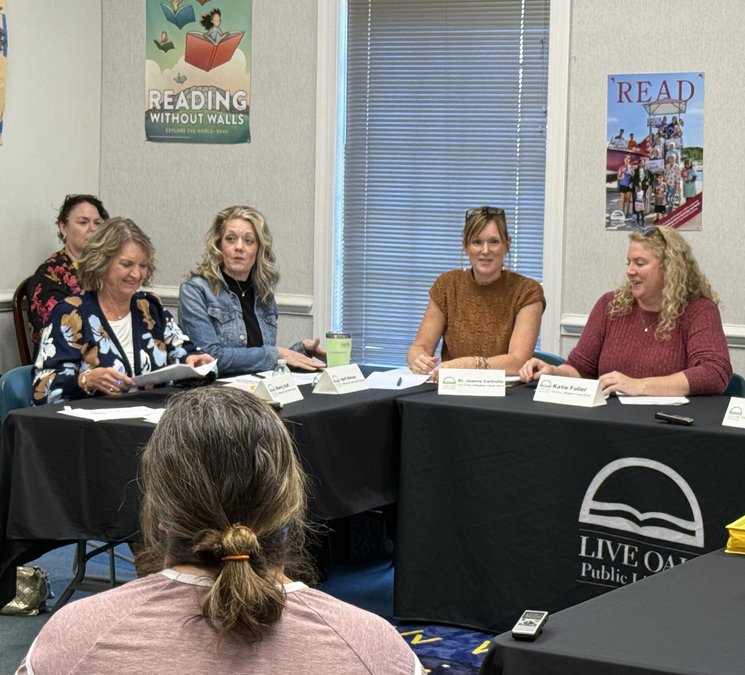
The special-called meeting, which lasted about three hours, drew a large audience amid growing community interest following the county commissioners’ Oct. 7 vote to recommend that Effingham withdraw from the regional system after more than 80 years and establish a new, county-run library system.
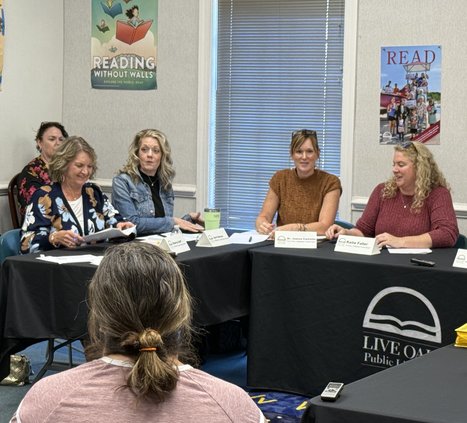
Vice Chair Joanna Cartrette said the meeting was called to address “many questions in the community” about what such a move could mean for local libraries, staff and resources. To help provide answers, the board invited Julie Walker, state librarian of Georgia, and Caroline Johnson, regional director of Statesboro Regional Public Libraries.
The board is weighing three options: remain in the Live Oak Public Libraries (LOPL) system, join the Statesboro Regional Public Libraries (SRPL) system, or create a new, independent in-county library system.
At the Oct. 7 commissioners’ meeting, joining Statesboro was not yet an option. “That was true at the time,” Effingham County Commissioner Beth Helmly, who attended Wednesday’s meeting, said. “But now it is an option. Statesboro has extended an invitation.”
Cartrette said that regardless of what direction the board takes, members intend to make any transition “as seamless as possible.”
County review found high administrative costs
The commissioners’ Oct. 7 recommendation followed months of study into Effingham’s financial and administrative relationship with Live Oak. The review was led by retired school librarian and media specialist Nate Ball and retired CPA Wesley Corbitt.Their analysis found that Effingham’s library funding is significantly higher than comparable counties, largely due to administrative overhead within the regional system.
County officials said creating a single-county library system would reduce administrative costs, provide greater local control and allow savings to be reinvested into staff, programs and facilities.
By establishing its own system, the county said, Effingham would have “a greater ability to tailor programs, resources and services to meet the unique needs of our residents.” The new structure, they said, “will enable the county to maximize taxpayer dollars by achieving cost savings and reinvesting those funds into enhanced local services and facilities.”
Debate over projected cost savings
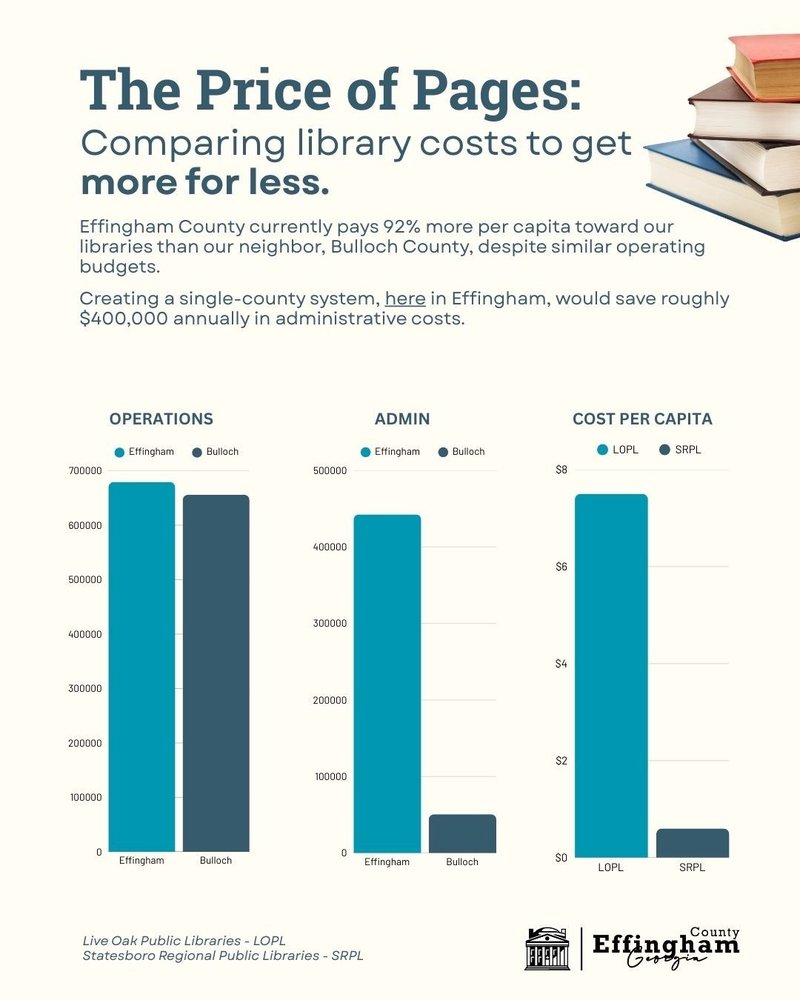
County officials estimate leaving Live Oak could save about $400,000 a year, allowing Effingham to reinvest those funds into local library improvements, resources and staffing. The county pays Live Oak $1.03 million annually to be part of its system, Walker said.During the Oct. 7 meeting, the county presented figures showing that Effingham’s administrative and operational costs for its Rincon and Springfield libraries are roughly $400,000 higher than those of neighboring Bulloch County, which operates under the Statesboro system.
However, Live Oak representatives dispute those projected savings.
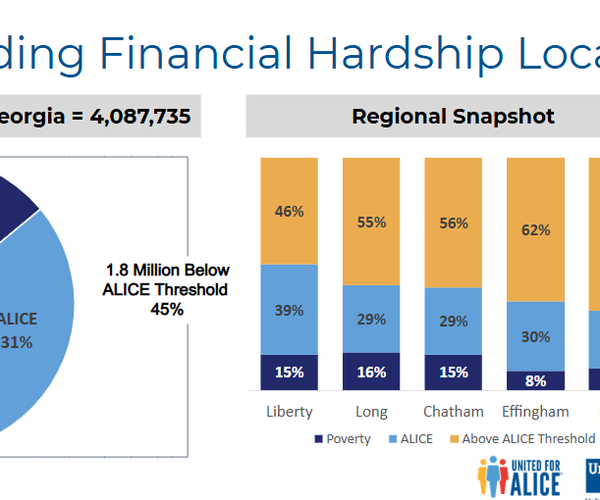
Live Oak Operations Director Doug Bailey and Effingham County Manager Tim Callanan sharply disagreed over the financial estimates. Bailey argued that the county’s analysis doesn’t account for all the expenses of running an independent system — including hiring a director, cataloging, IT services, insurance, HR, annual state audits and membership in the PINES network. Those costs are currently shared among the three counties in the Live Oak system: Chatham, Effingham and Liberty.
Bailey said regional systems are designed to share costs and resources among counties for greater efficiency. “We do not have Effingham, Liberty and Chatham each buying their own books with their own local money,” he said. “That’s why administrative costs appear high — they support shared services and a staff of 150 across 16 libraries.”
“They may not know what they’re getting into,” Bailey added, warning that such expenses could erode the projected savings.
Another key point of contention involves staffing costs. The county projects $530,000 for 15 local library employees, while Bailey said Live Oak’s budget puts that figure closer to $638,711.
What happens to books and materials?
Another major question raised by residents Wednesday centered on how much of Effingham’s current collection of books, materials and other resources the county would retain if it leaves Live Oak.According to Bailey, Effingham would lose about 90% of its physical collection because those materials belong to the regional system. Live Oak’s legal counsel, Wade Herring, confirmed that the county would retain only about 10%.
Bailey said the total value of the system’s physical collection at the end of the last fiscal year (June 30) was $1.09 million, with Effingham’s share valued at 9.48% — including adult, juvenile and audiovisual materials. He estimated it would cost about $900,000 to replace Effingham’s portion of the collection.
Cartrette said the county “has monies in place” to rebuild the collection if necessary, though it “would not happen overnight.” She added that repurchasing materials from Live Oak could also be considered. “They would never leave the libraries without resources,” she said. “There are different avenues.”
Walker assured the audience that core statewide resources — including PINES, the statewide library lending network, and GALILEO, Georgia’s virtual library system — would remain available under any new arrangement. But additional databases purchased by Live Oak would have to be replaced. Walker also said the county would lose access to some digital resources, including certain audiobooks and e-books.
Staffing and retirement impacts
If Effingham remains with Live Oak or joins the Statesboro Regional system, local library employees would retain their jobs, health insurance and access to the Teachers Retirement System, Walker said.If the county creates its own system, however, employees would lose participation in the state retirement plan.
Governance and local representation
Governance is also a key issue. Effingham currently has two representatives on the Live Oak regional board, compared to eight from Chatham County and two from Liberty County. Some local officials have cited that imbalance as a reason to pursue an in-county system with more control over local operations.If Effingham were to join the Statesboro Regional Public Libraries, it would have two representatives on that board as well — the same as each of the other five member counties: Bulloch, Bryan, Candler, Emanuel and Evans. Supporters say that structure would offer more equitable representation for Effingham County.
Addressing censorship concerns
Some residents have expressed fears that the county’s motivation for leaving Live Oak could be tied to censorship or book bans. Those concerns stem from a 2023 meeting in which Commissioner Roger Burdette voiced objections to LGBTQ-themed materials in Effingham libraries.Board members emphasized Wednesday that Effingham libraries would remain Book Sanctuary Libraries — public spaces committed to protecting the right to read, providing access to challenged and banned books and educating the public about censorship.
Johnson of the Statesboro Regional system said her organization also does not censor books or restrict access to materials based on content.