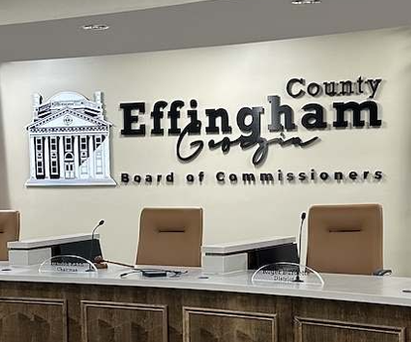
EFFINGHAM COUNTY, Ga. — As southeast Georgia’s coastal plains and fast-growing industrial corridors evaluate a potential wave of data center development, Effingham County has emerged as a key focal point in early discussions about an industry that has not fully arrived but is already shaping policy debates and community concerns.
Georgia has become a hub for these facilities — large buildings that house IT infrastructure. Nearly 4,000 data centers are scattered across the United States, with Georgia home to roughly 200. Tech companies are eager to build these centers in Georgia because of tax breaks estimated to cost the state and local governments about $2.5 billion in fiscal year 2026.
Several bills circulated through Georgia’s 2026 legislative session regarding data centers, ranging from eliminating tax credits to imposing stricter regulation. It was one of a slew of states that considered moratorium bills to temporarily halt construction — Maine recently became the first state to pass such a ban.
However, Georgia lawmakers failed to pass new rules on data centers this year, leaving counties like Effingham to navigate one of the fastest-growing industries in the country largely on their own.
In Effingham County, leaders say there are no concrete proposals or confirmed projects from data center companies, but they acknowledge early inquiries and ongoing discussions.
“This whole topic is new not only to us but to all development authorities and counties,” Brandt Herndon, CEO of the Effingham County Industrial Development Authority, said. “It’s incumbent upon us as a development authority to learn as much as we can … research and do our due diligence in case something were to come this direction.”
Early signals
While other southeast Georgia counties report limited activity or no formal proposals, Effingham County has been among those most actively engaged in early-stage evaluation as interest from tech companies grows statewide.
Though inquiries have remained largely exploratory.
Herndon said the Effingham IDA has fielded several data center inquiries.
“They’ve reached out … there’s been several,” he said. “If we get any inquiries, we research them all. We talk to anybody who calls us … large companies, small companies, auto manufacturers. That’s what we’re supposed to do.”
Herndon said Effingham is not actively recruiting data centers, and the IDA’s focus remains on light industry. But he said the county is still weighing potential trade-offs as the industry gains momentum statewide.
“Like any economic development project … there’s always pros and there’s always cons,” he said. “You obviously want the pros to outweigh the cons.”
He pointed to potential tax revenue generated by large industrial facilities with relatively low demands on public services, while noting concerns tied to water and electricity use.
He said such facilities would most likely locate in existing industrial parks already equipped with water, sewer and buffer zones separating them from residential areas. Any proposal, he said, would be evaluated with an emphasis on public transparency.
Effingham County Manager Tim Callanan said discussions about data centers are ongoing at the county level, with a focus on resource protection.
“Any development that comes in will be subject to a water and sewer agreement with the county where we could set the terms, and one of the terms that we’re going to insist on … is that we want to see a closed-loop water system,” he said.
Data centers have been criticized for their water use to cool IT equipment. Closed-loop systems are designed to reduce water consumption by up to 70% to 100%.
“Even though the county has ample water supply, we still think you have to act in a responsible way to make sure that supply is being used efficiently and responsibly,” Callanan said.
Bulloch moratorium
In neighboring Bulloch County, commissioners instituted a 90-day moratorium on data centers to allow time to research and establish zoning regulations. A public hearing is scheduled for May 5 during the regular County Commission meeting.
“We know of no proposals for data centers trying to come to Bulloch County,” Bulloch County Chairman David Bennett said. “The data center issue is emerging all over the state. My intention with the moratorium was just to pump the brakes. We’re not even going to consider it until we can get a plan in place.”
Bulloch County leaders, like those in Effingham, have been gathering information from across the state. Bennett acknowledged potential tax revenue benefits but said he is cautious about long-term risks.
State regulators now require 15-year commitments from large data centers, but Bennett said that may not be sufficient as technology evolves.
“You build a data center here and that technology becomes obsolete, you can’t throw that thing out. We’re stuck with it forever,” he said. “For 15 years it’s generated millions … and then all of a sudden … They pack up and leave. Now you’re not getting anything. That hurts the local folks because you’re having to raise property taxes to make up for the loss.”
Rising concerns
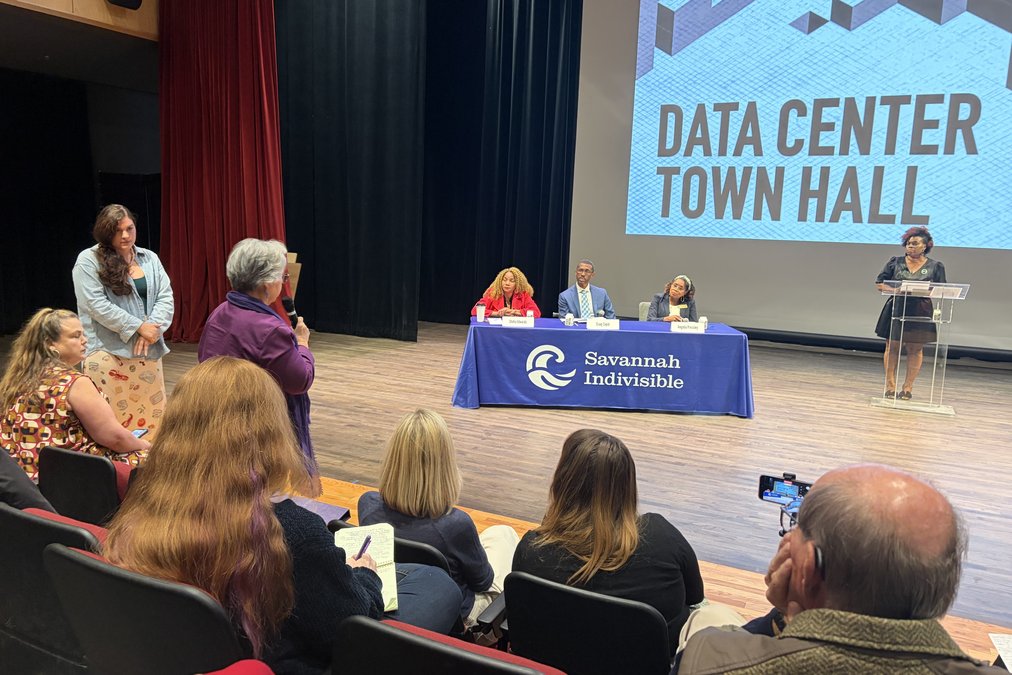
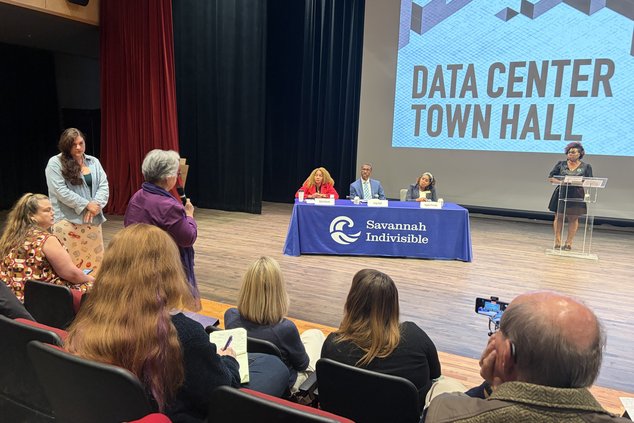
At an April data center town hall in Savannah, Georgia, Peter Hubbard, a Public Service Commission member, said the 15-year requirement includes a loophole.
“It is possible to get out of that contract in less than 15 years,” he said. “You can give notice and then pay another two years and then pay another two years on top of that. So with four years of payments, you can get out of paying the full 15.”
Chassidy Malloy of Georgia Conservation Voters, an environmental advocacy group, said the costs and impacts of data centers are already being felt by utility customers. Beyond electricity and water use, she cited concerns about noise, heat generation and land clearing.
“Data centers are not good neighbors,” she said during the town hall.
Opposition has continued to grow, with community groups circulating petitions against the facilities.
A question on whether Bulloch County should allow data centers is expected to appear on Republican Party ballots in the upcoming May election.
Kristen Stampfer, a Bulloch County resident and founder of Coastal Communities United, a regional nonprofit, said existing environmental pressures and rapid development make southeast Georgia a poor fit for data centers.
She also raised concerns about transparency and public education, saying she has sought information in Effingham County related to rumored activity but received no responsive records from county communications and denials from the IDA.
She also said she is concerned about officials receiving presentations from Georgia Power, which she described as one-sided.
“I think they need to have a real, real education program … if they are actually considering allowing these,” Stampfer said. “There’s no transparency. They really need to listen to citizen input. I think the NDA things that they do and the back door deals really need to be stopped and put out in the open.”
She urged leaders to consider environmental concerns.
“Data centers take way more than they give back to the communities,” Stampfer said. “They take too much in resources and power that the people end up paying for.”