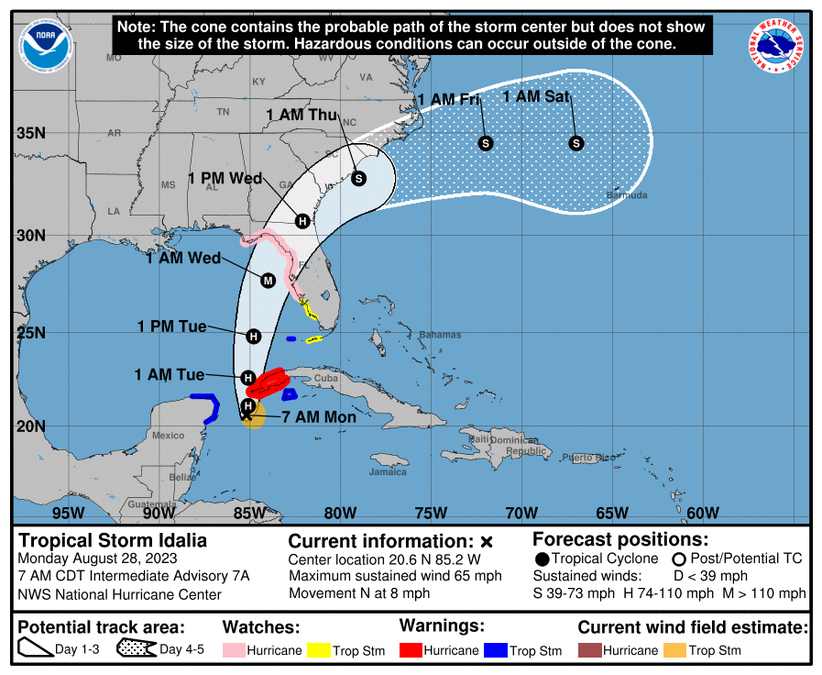
WASHINGTON -- The federal government is closely monitoring Tropical Storm Idalia and encouraging residents in the storm’s path to get prepared today.
Those living in the path of Tropical Storm Idalia should take steps now to prepare for the impacts of this storm, which is forecast to become a major hurricane before it reaches the Gulf Coast of Florida. The risk of life-threatening storm surge and hurricane force winds may begin along portions of the west coast of Florida and the Florida Panhandle as early as Tuesday.
Residents and visitors in potentially affected areas should learn their evacuation routes now, have a family emergency communications plan, charge their devices and batteries, ensure they are receiving emergency alerts and check on their neighbors, especially those who are older adults or may need additional assistance.
Residents should plan for family members, pets and service animals’ evacuation plans. People with disabilities, older adults and caregivers may need to take additional steps to plan for their individual circumstances to effectively prepare for disasters.
Anyone in the forecast path of the storm should monitor local weather alerts for updates, follow directions provided by their local officials and heed local evacuation orders.
The Federal Emergency Management Agency (FEMA) encourages everyone to click on www.ready.gov/hurricanes to learn more about how to be prepared and how to protect yourself and your loved ones during emergencies. Make sure your family, friends, and neighbors understand the potential affects Tropical Storm Idalia could bring to your area.
Now is the Time to Prepare
§ Get Emergency Alerts: Make sure to sign up to receive alerts in your community (Effingham County WENS) and stay updated on the latest weather news from the National Weather Service.
§ Gather Supplies: Have enough supplies for your household. Include medication, disinfectant supplies, baby and pet supplies. After a hurricane, you may not have access to these supplies for days or weeks.
§ Don’t drive through flood waters: Almost half of all flash flood deaths happen in vehicles. When in your car, look out for flooding in low-lying areas at bridges and at highway dips. As little as 6 inches of water may cause you to lose control of your vehicle.
§ Personal Safety: Listen to officials and stay off the roads if told to do so. Evacuate if told to do so.
Evacuating: If you are in potentially affected areas, you should be familiar with evacuation routes, have a family emergency communications plan, keep a battery-powered radio handy and have plans for your family members and pets. If you are a person with disabilities, you may need to take additional steps to plan for both your needs and that of your service animal.