SPRINGFIELD, Ga. — Effingham County commissioners are considering new rules that would make future data centers conditional uses while strengthening regulations for large industrial projects.
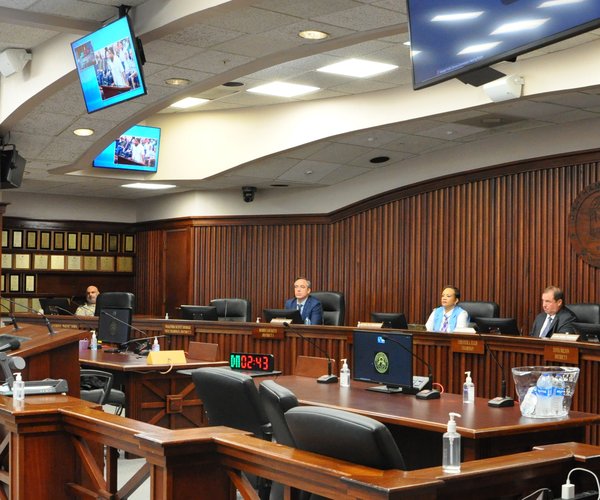
No action was taken Tuesday during a work session on the proposed regulations.
Planning Manager Akela Wright told commissioners that staff initially considered a separate data center ordinance. After reviewing the county’s existing development and site-plan requirements, she said many of the proposed standards could be incorporated into existing ordinances, with additional conditions specifically applied to data centers.
Under the approach staff is developing, data centers would be listed as conditional uses in the county’s table of permitted uses. Wright said data center projects would have to comply with existing heavy industrial requirements as well as additional conditions specifically applying to data centers.
The discussion comes as Effingham County continues to work through the proposed Project Camellia data center development announced by OpenAI in July. The $20 billion project is planned for the Savannah Gateway Industrial Hub and could eventually include up to 3.2 gigawatts of capacity, with construction expected to be phased through 2032.
County Manager Tim Callanan said the review also showed that many of the proposed requirements could apply beyond data centers.
The county could strengthen its existing noise, lighting, buffering and other industrial regulations, Callanan said, while adding requirements specifically for data centers.
Noise and generators
The county already has a noise ordinance that establishes decibel standards. Wright said staff plans to strengthen those regulations, while Callanan said the county also wants to address low-frequency noise.
The changes would not be limited to data centers, Callanan said.
“A low frequency hum noise violation, it doesn't matter whether it's coming from a data center or a sawmill,” he said.
Wright said the county also plans to strengthen lighting requirements and take a deeper look at existing buffer and screening standards.
Emergency backup generators would receive specific requirements covering location, buffers, setbacks, screening, exhaust orientation, testing and maintenance hours, according to Wright. The generators also would have to comply with the county’s noise regulations.
Callanan said staff is considering restrictions on accessory uses at data centers. He said natural gas power turbines would not be an allowable accessory use, while uses such as battery energy storage systems and administrative buildings could be allowed.
The proposed regulations also would address decommissioning, water and sewer demand, power demand and traffic.
Wright said applicants would have to document anticipated water and sewer demand and available capacity. Power demand would be disclosed during the application process for coordination purposes.
Staff also plans to require traffic studies when specific project characteristics trigger them, Wright said. Construction traffic would be addressed through development-plan review.
Wright said the county also plans to create a broader definition of data centers so future facilities cannot avoid the regulations simply by using a different name as technology changes.
Planning Board review
Commissioners also discussed changing how larger commercial and industrial conditional uses are reviewed.
Under the current process, conditional uses and variances go directly to the Board of Commissioners rather than the Planning Board, Callanan said.
He explained that the current arrangement was originally intended in part to streamline smaller residential conditional uses, such as a home-based business.
Burdette said he understood the reason for the current process but favored Planning Board review for larger projects.
“I understood why we did what we did because a lot of smaller things took forever for the small residential person to do something,” he said. “But things on a larger scale, I'd love to see go to the Planning Board.”
Commissioner Beth Hemly said she also was interested in examining the process.
Callanan said staff could look at whether the change should apply to industrial and other larger-scale uses.
Hemly also raised the county’s previously discussed possibility of a moratorium, saying it was an issue she had been pushing since August.
Construction impacts
The proposed changes also would address impacts associated with construction.
Commissioners discussed dust control, temporary diesel generators, construction noise, large-scale clearing and burning.
Callanan said large industrial sites should have dust-control plans and stronger standards for construction activity. Temporary generators used during construction would need to meet county requirements even if they were not part of the permanent operation, he said.
The county also is examining regulations involving burning during large-scale clearing operations.
Burdette asked whether the county currently has a way to measure dust and odors.
Callanan said odor can be difficult to regulate when it does not exceed a specific legal threshold but still creates a nuisance. He said staff would look at existing regulations and methods used elsewhere to develop standards that can be enforced.
Wright said larger industrial facilities also may be subject to state and federal environmental permits that address air pollutants.
Looking to other communities
Burdette asked whether the county is consulting outside experts to better understand data centers and their potential impacts.
Callanan said staff has been using the Resource Center Hub and plans to contact communities that already have data centers to learn what has worked and what has not.
“We don't want to go down a path that some community has already gone down, and found out it's not going to work, or it's unenforceable,” Callanan said.
Wright said staff also has researched data center regulations in other states, including Louisiana.
Public comment
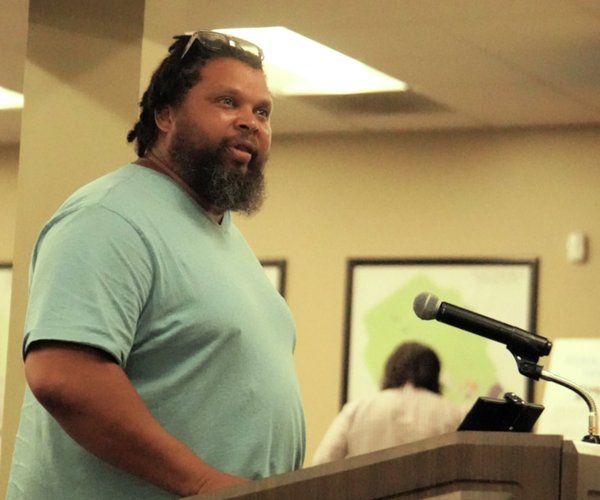
One resident told commissioners that residents have repeatedly expressed opposition to data centers and urged the county to consider a moratorium rather than developing regulations for future projects.
Attorney Kenny Lak urged commissioners to consider stronger ordinances and conditional-use requirements for data centers. He also said the county should consider research from sources beyond companies and industries connected to data centers.
Callanan said staff is targeting the November commission meeting to bring the proposed changes before commissioners for consideration.