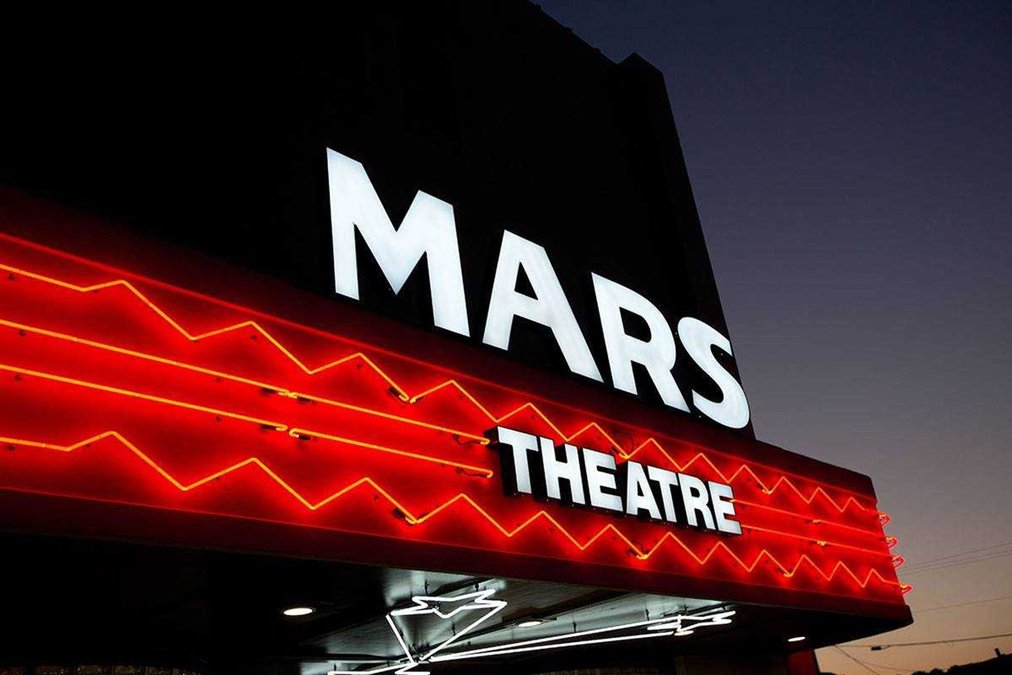
Editor’s note: The following opinion was submitted by Springfield City Manager Lauren Eargle. The city of Springfield operates the Mars Theatre.
SPRINGFIELD, Ga. — The Mars Theatre is more than a place to watch a movie or see a concert.
It is a historic community asset in downtown Springfield. And like any community asset, its future depends on whether the community uses it.
That is why attendance matters. Every empty seat affects what we can afford to bring to the Mars, how we price tickets and ultimately how much programming we can offer. With just 223 seats, the economics of operating a historic theater are very different from those of a large arena or entertainment venue.
When people compare the cost of a Mars ticket with a ticket somewhere else, they are often looking at only one part of the equation.
The ticket price isn't always the price of the night out.
Parking, fuel, concessions, travel time and, for more distant venues, meals or even a hotel can all change the actual cost. At the same time, the ticket price at the Mars reflects the reality of bringing entertainment to a 223-seat theater.
The challenge is finding the balance: bringing quality entertainment to Springfield at prices people are willing to pay while keeping the Mars active and sustainable.
That balance depends on something we cannot manufacture:
An audience.
223 seats changes the math
The Mars Theatre has just 223 seats.
Large arenas have thousands of seats across which they can spread the cost of entertainment. At the Mars, every dollar has to be divided among a much smaller potential audience.
For a simple example, imagine an entertainer costs $10,000.
If every one of our 223 seats sells, nearly $45 from every ticket would be needed just to pay the entertainer.
That is before paying staff, sound and production costs, marketing, ticketing expenses, artist hospitality and other expenses associated with putting on a live performance.
Another way to look at it: Every additional $1,000 we spend on entertainment represents approximately $4.48 for every available seat in the building if we sell out.
That creates a narrow balance between the caliber of entertainment we can bring to Springfield and the ticket price our Effingham County market is willing to support.
We could book more expensive entertainment, but with only 223 tickets available to help pay for it, those costs have to go somewhere.
Our challenge is finding the sweet spot: quality entertainment people are excited to see at a price that remains reasonable for our market.
The building comes first
There is another reality of operating the Mars that is not reflected in the price of an entertainer.
It costs approximately $100,000 per year just to maintain the basic operation of the theater as a building.
That includes utilities, insurance, routine repairs and maintenance, and the basic costs associated with keeping a historic facility operational.
That works out to approximately $1,923 every week of the year.
If the Mars operates an average of four days per week, that is roughly $481 in basic building overhead for every operating day.
And that is before we put anything on the screen or stage.
That amount does not include event staff, entertainers, sound and lighting production, film rental, licensing fees, marketing or the popcorn, candy, beverages and other inventory we purchase before we can sell concessions.
Those costs come next.
Of course, we do not attempt to recover every dollar of annual building overhead through the ticket price of a single performance. Movies, concessions, rentals, sponsorships, advertising and live performances all contribute to the Mars Theatre’s overall revenue.
But these numbers illustrate the economics we are working with.
Now let’s talk about the empty seats
Everything I have described assumes something that rarely happens: a completely sold-out Mars Theatre.
The reality is that selling all 223 seats is extremely rare. There are performances where selling even 100 tickets can be a struggle.
That changes the math considerably.
Go back to our $10,000 entertainer.
At 223 tickets, the entertainment cost represents approximately $44.84 per ticket.
At 150 tickets, it is $66.67 per ticket.
At 100 tickets, it is $100 per ticket just to pay the entertainer.
And that still does not account for the other costs of putting on the show.
This is why we cannot responsibly price every performance based on the assumption that 223 people are going to show up.
We have to consider what we realistically believe attendance will be.
At the same time, we do not want to price tickets so high that the price itself becomes the reason people do not attend.
That is the balancing act we face with every performance we consider bringing to Springfield.
223 seats in a county of more than 75,000
That leads to a question we continually ask ourselves: How do we get more people to the Mars?
Effingham County has more than 75,000 residents. In a county that size, it seems like filling 223 seats should be achievable.
But having 223 seats available does not mean 223 people automatically walk through the doors.
We have to earn that participation.
That is why we pay attention to what our community tells us.
We look at which movies perform well. We watch which concerts sell tickets. We see which genres generate excitement and which events do not connect with an audience. We listen when people tell us what they want to see next.
Our goal is not simply to fill a calendar.
Our goal is to provide programming the community actually wants so we can fill more seats, generate more revenue and keep this historic asset active and sustainable.
Participation helps determine the price
There is a direct relationship between community participation and what we can afford to bring to the Mars.
It also affects what we have to charge.
If historical attendance tells us we might sell 100 or 125 tickets for a particular type of performance, we have to consider that reality when deciding whether we can afford an entertainer and what the ticket price needs to be.
But the opposite is also true.
The greater the community participation, the more confidently we can price tickets lower.
If we become confident that a particular type of performance will draw 175, 200 or all 223 people, we can spread those costs across more tickets.
We can take greater chances on entertainment. We can consider bigger acts. We can offer more programming.
And we can do all of it with less risk of operating at a loss.
Every ticket purchased does more than support that particular performance.
Your attendance helps determine what comes next.
Compare the night, not just the ticket
Now let’s go back to the person comparing our ticket price with a ticket somewhere else.
Suppose a Savannah performance is advertised at $30 per ticket while a comparable Mars performance is $40.
For two people, that means $60 for Savannah tickets and $80 for Mars tickets.
At first glance, the Savannah option is $20 cheaper.
But the ticket price is not the price of the night out.
Start with parking.
At the Mars, it is free.
Parking at a major arena can add $20 or more to the evening before you ever walk through the doors. Suddenly, much of that ticket-price difference has disappeared.
Then there are concessions.
At the Mars, our current prices include a large popcorn for $10, a draft beer for $7, large candy for $4 and a large soda for $5.
A couple can share a large popcorn and each have a draft beer for $24 total. Add a large candy and large soda, and you are at $33 for all of it.
I have personally attended events at larger venues where a single beer was nearly $20.
Then add the drive.
Traveling from Springfield to Savannah takes approximately 40 minutes under normal conditions. That is roughly 80 minutes of driving round trip, plus fuel, before accounting for event traffic.
And anyone who has attended a major arena event knows that the show ending does not necessarily mean the drive home has begun.
Thousands of people leave at approximately the same time. You still have to get back to your vehicle and then join everyone else trying to leave the parking area.
At the Mars, when the final song ends, you walk outside, get in your vehicle and start heading home.
For many Effingham County residents, home is only minutes away.
That convenience has value, too.
And the farther away you are traveling for entertainment, the equation changes even more.
Add additional fuel, meals on the road and, in some cases, an overnight hotel stay.
A ticket that looked inexpensive when you first saw the advertised price can turn into a considerably more expensive outing.
That is why we encourage people to compare the night, not just the ticket.
This isn’t an argument against Savannah
We are fortunate to live close to a city that attracts major concerts, sporting events and entertainment that a 223-seat historic theater simply cannot accommodate.
Go enjoy them. I know I love a Ghost Pirates game.
This is not an argument that every night at the Mars is cheaper, either. Sometimes it will not be.
It is simply a request to make a fair comparison.
If the entertainment is comparable, look beyond the face value of the ticket.
Consider parking, fuel, concessions, drinks, travel and your time.
There is value in being able to have dinner locally, park for free in downtown Springfield, enjoy a live performance and be heading home minutes after the final song.
Where does your entertainment dollar go?
There is one final part of this comparison that does not appear on your receipt.
Where did your entertainment dollars go?
When you attend a performance at the Mars, those dollars stay much closer to home.
Have dinner at a Springfield or Effingham County restaurant before the show. Visit another local business. Purchase concessions at the Mars.
Those dollars create local economic activity and contribute to our local sales tax base.
Your ticket also supports the continued programming of a historic community asset right here in Effingham County.
And when you fill a seat, you are casting a vote for what you want to see happen here.
A strong turnout tells us: Do this again.
A sold-out performance tells us: We can take a bigger chance next time.
And a consistently engaged audience gives us the confidence to bring better entertainment to Springfield while spreading those costs across more people.
Keeping the Mars alive is a community effort
The city can maintain the building.
We can develop programming, negotiate with entertainers, promote performances and show movies.
We can keep concessions affordable.
We can experiment with different genres, different events and different price points.
And we can continually ask the community what it wants.
But there is one thing we cannot manufacture: an audience.
For the Mars to succeed as a community asset, the community ultimately has to use it.
That does not mean we expect every resident to attend every week.
It means that in a county of more than 75,000 residents, we need enough people to regularly look at our calendar and find something that makes them say, “I want to go see that.”
And it is our responsibility to keep listening, experimenting and adjusting until we are offering enough variety that more people are saying exactly that.
The relationship works both ways.
We need the community to support the Mars, and the Mars has to earn that support by providing entertainment the community values.
When those two things come together, 223 seats suddenly do not seem like very many.
So the next time you see a Mars ticket for $35 or $40 and compare it with a $25 or $30 ticket somewhere else, do not stop at the ticket price.
Add the parking.
Add the gas.
Add the concessions.
Add the drinks.
Add the travel.
Add the time.
And, if you are traveling farther, add the meals and hotel.
Then consider where those dollars are going, what your attendance tells us and what your purchase helps make possible for the future.
Because the ticket price is not always the price of the night out.
And every seat we fill helps keep the Mars alive.
Lauren Eargle
Springfield city manager