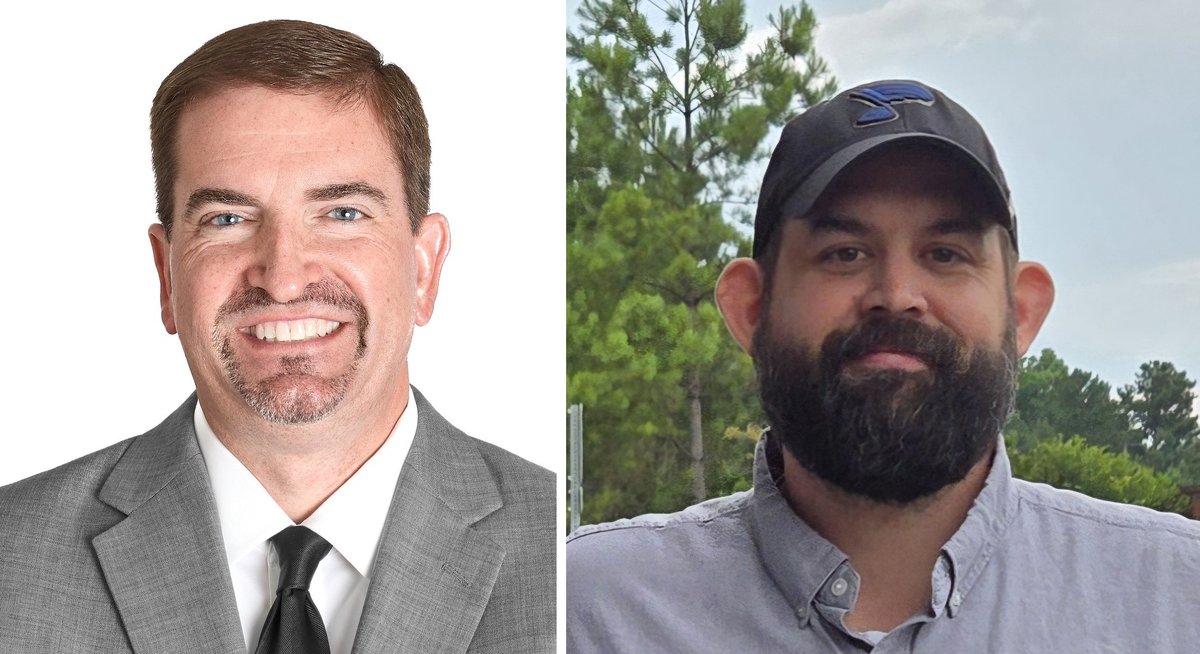
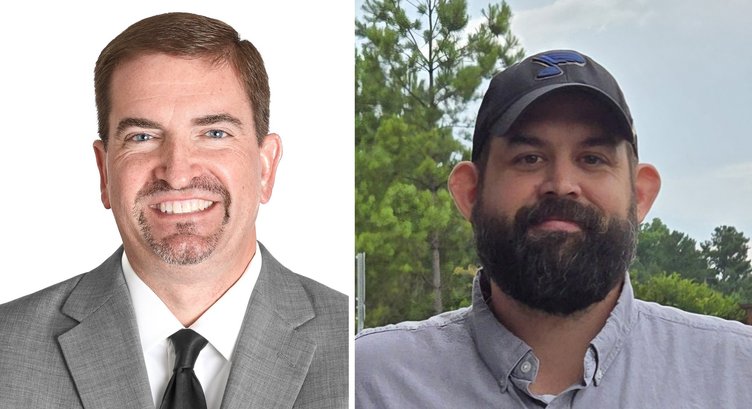
Incumbent Jamie DeLoach points to planning, economic development and tax relief as ways to manage Effingham County’s growth. Challenger Scott Hoffman opposes the proposed Project Camellia data center and calls for greater transparency, stronger safeguards and more public input on development decisions.
The Effingham Herald asked both candidates the same three questions about the data center, property tax relief and county growth. Their biographies and responses follow.
THE QUESTIONS
- Project Camellia
Effingham County’s proposed Project Camellia data center for OpenAI has generated questions about the project’s impact on nearby residents, water resources, electricity demand, noise and the environment. What conditions, safeguards or enforceable commitments do you believe should be in place to protect residents, and what role should the County Commission play in ensuring those protections are met?
- Property Tax Relief
Effingham County has launched Project Zero, with the goal of eliminating county property taxes on qualifying homesteads, and commissioners recently backed a proposal to increase the senior school tax exemption from $20,000 to $100,000. Do you support these approaches to tax relief? How would you ensure the county can sustain meaningful tax relief over the long term while continuing to fund public safety, roads and other essential services?
- Growth and Development
As Effingham County attracts major industrial investments and continues to grow, how would you determine which development projects are appropriate for the county? What changes, if any, would you make to ensure residents have a meaningful voice in development decisions before those decisions are made?
SCOTT HOFFMAN
Democrat · Challenger
Biography
I am a dedicated husband and father. My wife and I have been together for 23 years and are raising two children. I am a combat veteran who served in the Army as a Cavalry Scout from 2010 to 2016. My experience as a sergeant in Afghanistan shaped my leadership style and sharpened my ability to take objective, decisive action.
After leaving the Army, work opportunities brought my family to the area. We settled in Effingham because of its strong sense of community, rural character and quiet lifestyle.
I currently work as a transportation operations manager, where I oversee 20 employees and manage my department’s budget, including asset management and operating expenses. With two active teenagers, much of my free time has been dedicated to their schedules and the youth soccer community. Now that my oldest is in college, I am turning my desire to serve toward the county.
I joined the military because I strongly believe in the values outlined in our country’s founding, most importantly that the government should be of, by and for the people. I believe District 3 deserves a leader who is directly engaged with the community, makes room for residents’ questions and concerns, and makes decisions that benefit people rather than corporations.
Project Camellia
I am against the OpenAI data center and intend to work within all legal options to stop the development. If the data center cannot be stopped, I would like to see ordinances in place to increase setback areas and, at a minimum, regulate noise pollution, light pollution and on-site generator use.
I support severe financial penalties and work-stoppage orders if ordinances are violated. I include work-stoppage orders because OpenAI has already shown a willingness to flout the law in other cities, where financial penalties are minimal compared with its valuation.
At the data center forum on Sept. 14, Public Service Commission member Dr. Alicia Johnson said multiple times that she had provided the county with a list of recommended ordinances. Our county commissioners have not shared that information or publicly presented enforceable rules for OpenAI. The mitigation measures shared at the Aug. 29 forum were presented as OpenAI’s agreements, with no discussion of how they would be enforced.
Property Tax Relief
I believe we should stop giving tax abatements to corporations looking to come into the county. Corporations should be expected to pay their share.
I also believe that, since property taxes are based on current property values, the county should make every effort to lower millage rates as property values increase. Property tax collections should not increase simply because property values have risen.
I am concerned about how Project Zero and LHOST shift tax collections from property taxes to sales taxes. This seems to disproportionately affect renters, small-business owners and other non-homestead property owners.
Growth and Development
I believe the county should attract more job-dense opportunities to existing industrial zones. Warehouses and OpenAI employ very few people for the amount of land they occupy. I believe we should work to increase the number of jobs per square foot of industrial space.
I also support a moratorium on industrial rezoning. Instead, the county should focus on supporting opportunities for new local small businesses. Besides bringing more commercial options to county residents, local small businesses contribute far more to the local economy than warehouses and large corporations.
When reviewing rezoning and development requests, commissioners should consider all environmental impacts and prioritize public comment, especially from communities directly affected by proposed changes. These decisions should include multiple, properly noticed public comment periods. These considerations are vital because once land is developed for these industries, it cannot be reclaimed for natural or agricultural use.
Project Camellia highlighted the severe lack of transparency between the county and the public. Communications and timelines that continue to emerge through Freedom of Information Act requests show how long county officials knew about the project without informing residents. I believe officials deliberately obscured the truth when citizens asked the county manager and a sitting commissioner about the prospects of data centers in Effingham County three months before the official announcement.
The public is rightly angry about these developments and is losing trust in its government.
JAMIE DeLOACH
Republican · Incumbent
Biography
My name is Jamie DeLoach, and I am the current County Commissioner for District 3 in Effingham County. I was born and raised in the Clyo area and graduated from Effingham County High School before earning a degree in marketing and sales management from Georgia Southern University. I later returned to Georgia Southern and earned an MBA in business management.
I am a lifelong member of Bethel Lutheran Church, where I have served in various roles over the years. I currently serve as chairman of the church council. I am married to Jenni DeLoach, a math teacher at Effingham County High School, and we have three children who attend Springfield Elementary School and Effingham County Middle School.
I have nearly 20 years of banking experience and currently work as a commercial lender. Since becoming a county commissioner, I have served on the Board of Managers for the Association County Commissioners of Georgia, representing the 12th Congressional District. I currently chair the association’s Economic Development and Transportation Policy Committee.
I also chair the Savannah Harbor Interstate 16 Corridor Joint Development Authority, which includes Effingham, Chatham, Bulloch and Bryan counties, and serve as vice chairman of Effingham Health System’s Foundation Board. I have been a member of the Effingham County Exchange Club for more than 15 years. I believe it is important to represent Effingham County throughout the state and region, which is why I have become involved with boards outside our county.
Project Camellia
On the topic of Project Camellia, some of the main points that should be addressed are water usage, electricity infrastructure costs and noise.
The project will not tap into the aquifer for its water source. It will use a closed-loop cooling system, which requires less water than other cooling methods. Electricity infrastructure costs should not be passed down to residents. Georgia House Bill 1063 addresses this issue, primarily stating that customers should not pay for the infrastructure and energy costs associated with large data center construction and operation.
Noise is also a concern, and OpenAI has started a noise study to establish a baseline before construction begins. The backup power solution will be battery power, and there will be no on-site power generation because Plant McIntosh will supply electricity to Project Camellia. Georgia Power is not going to pass costs down to consumers.
County commissioners can address these issues through the site plan approval process, the water and sewer agreement with OpenAI, and existing county ordinances.
Property Tax Relief
Our Board of Commissioners recently voted unanimously to increase the senior school tax exemption, and I hope we can continue providing additional tax relief to this group. Our goal through Project Zero is to reduce county property taxes to zero for qualifying homesteads.
The tax revenue we receive from Project Camellia will help provide property tax relief. Existing warehouses in the county have also helped us lower the county millage rate, and that additional revenue has been very helpful.
When we diversify our tax base by attracting industries that provide jobs and tax revenue, along with commercial growth, we create opportunities to lower the millage rate while maintaining or increasing the level of services we provide to the community.
The 1% sales tax has also been a tremendous help in funding roads, parks, water and sewer projects.
Growth and Development
When evaluating a company or development project, I believe we must consider the resources it will require from the county, how much tax revenue it will generate and how many jobs it will create. Other factors also matter, but those are the main considerations I focus on.
Eighty percent of our county remains zoned agricultural residential, so I believe we have a great opportunity to manage future growth. We spent almost two years under a moratorium to give us time to update our zoning ordinances, and I believe the updated ordinances are a significant improvement over the previous ones.
Over the last two years, we have established multiple master plans to guide future growth decisions, and I believe that was money well spent.
I also believe hiring our current County Manager, Tim Callanan, 6½ years ago was a great decision. Tim has been instrumental in moving the county forward fiscally and advancing capital projects. He has provided valuable insight into major initiatives, including our Regional Water Supply project.
We have a lot going on in the county, and it is important to have the right personnel in place.
I want to thank the residents of District 3 for supporting me over the past 12 years, and I am asking for your vote again.
I have missed out on personal and family time over the years, but Effingham County is a big part of me, and I have enjoyed serving in this role. I especially want to thank my wife, Jenni, who has always been extremely supportive and has been my rock during the low moments in this role. I could not do what I do without her support.
I also thank my parents, who provide great support to my family when I am away fulfilling my duties as a commissioner. I give God all the credit and thank Him every day for my blessings, especially my family and friends.