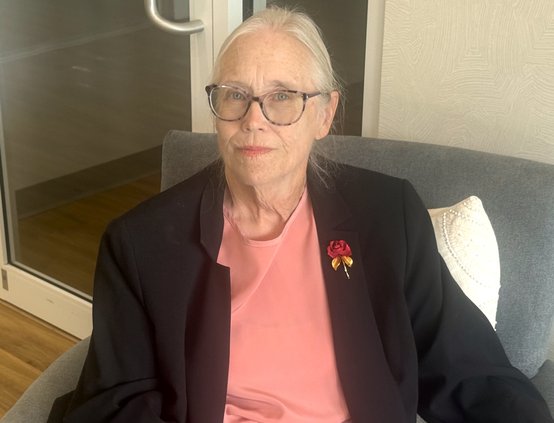
RINCON, Ga. — Darlene Ainsworth sees Effingham County changing every time she drives through it. New homes are going up, development is spreading and questions about roads, drainage and the county’s ability to keep pace are becoming harder to ignore.
She doesn’t believe growth can or should stop. But the retired Gulfstream supervisor believes county leaders need to slow down, take stock of what has already been approved and listen more closely to the people who will live with the consequences.
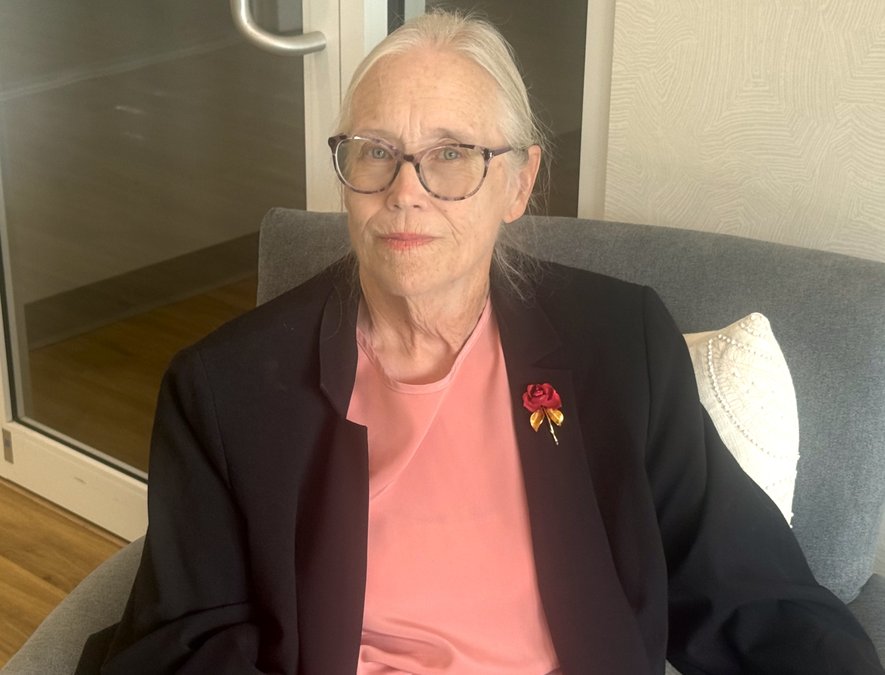
Ainsworth, a Democrat, is challenging Republican incumbent Roger Burdette for the District 2 seat on the Effingham County Commission in the Nov. 3 election. She wants more public input on development, greater transparency and protections for projects such as a proposed data center, a reassessment of county spending priorities and more support for older residents.
“I want to take your voice to the commission. I do not want to take the commission’s edicts down to you,” Ainsworth said.
Burdette was asked to participate in an interview for this article but declined.
A life rooted here
Ainsworth, 69, has lived in Effingham County for nearly 40 years. She and her late husband, Thomas “Randy” Ainsworth, moved to the Savannah area in 1980 after he found work at Gulfstream. They first settled in Port Wentworth, then moved to Effingham County when their children reached school age.
Her own childhood took her across the country and overseas. Her father served in the Air Force, and the family lived in Japan, England and North Dakota before settling in North Carolina. Ainsworth finished high school there, attended the University of North Carolina and studied at its Kenan-Flagler Business School.
Her political path also took some turns. Ainsworth once identified as a Republican and helped organize the North Carolina Libertarian Party. She traveled across the country collecting petition signatures to get Libertarian candidates on the ballot.
She was drawn to Libertarian ideals but came to believe that, after about four years, the party was unlikely to elect candidates to office. She became a Republican because she considered herself fiscally conservative and socially liberal and believed the Republican Party shared her views on spending.
Over time, that alignment changed. After her husband died in 2014, Ainsworth paid closer attention to politics. By 2015, she was increasingly disillusioned with the Republican Party, which she no longer considered fiscally conservative or aligned with her values. She had been voting Democratic for a while and eventually concluded that Democrats better reflected her vision for the country and Effingham County.
After college, Ainsworth worked in the moving business, where she met Randy. They married in 1980, and she later joined him in the Savannah area. At Gulfstream, she worked as a technical writer and editor before becoming a supervisor in technical publications.
Their three children grew up in Effingham County, and the family’s ties to the community remain strong. Her daughter, Stephanie Reese, lives nearby in Westwood Heights. Her younger son, Jonathan Ainsworth, lives in District 3 near Guyton. Her older son, Thomas J. “TJ” Ainsworth, died in September 2026, but his family remains in District 2.
Ainsworth has four grandchildren and considers being their grandmother one of her most important roles.
“A lot of times my most important job title is Tommy’s grandma,” she said.
Since retiring, Ainsworth has volunteered at Manna House food pantry and worked as a poll worker. She also helps care for her 91-year-old mother, Camille Love.
Listening to residents
Ainsworth said she decided to run because she believes county residents deserve a greater say in local decisions. She wants commissioners to explain their choices and listen to the public before making major decisions.
The county’s move from Live Oak Public Libraries to Statesboro Regional Public Libraries is one example of what concerns her. County officials said the change will save money, give the county more control over library hours, policies and programs, and free up money for services, staff pay and facilities. Ainsworth said her concern is how the decision was made. Although the county held public hearings, she believes key discussions took place “behind closed doors,” before residents had a meaningful chance to weigh in. She also questioned the removal of library board Chair Erica Biezenbos after Biezenbos raised concerns about the transition.
The library dispute began in 2023, when Burdette sought to have books removed because he considered them inappropriate for children.
Ainsworth said her concern is not simply whether particular books are appropriate, but that a commissioner sought their removal. She believes the later move to a different library system also gave county officials more control over which materials are available to readers.
Ainsworth said she believes the county could have legitimate reasons to seek savings but disagreed with the way the transition unfolded. She also questioned whether the library board had been adequately consulted before the move was announced.
Ainsworth also wants to support the county’s senior center, which she said provides an important service but needs more space. Her mother has used the center, giving Ainsworth firsthand knowledge of its programs.
“We take care of our kids, you know,” she said. “But there’s more and more old people around, more of us.”
Managing growth
Ainsworth’s concerns about public input extend to development. She sees new homes going up across the county and believes officials should take stock of previously approved projects before approving more.
She wants the county to improve infrastructure and conduct a comprehensive review of its zoning regulations. She also favors stronger requirements for hydrology studies to determine where stormwater will flow when land is developed.
Ainsworth acknowledged that she is not qualified to prescribe every change the county should make to its zoning rules. But she believes water management deserves more attention, pointing to standing water and drainage work in her own neighborhood as examples of the problems residents face.
Housing presents another challenge. Ainsworth is concerned about tightly packed developments with limited parking and little space, but she also recognizes the county needs more housing options. She wants a broader range of choices between expensive homes and small-lot rental communities.
She applies the same scrutiny to industrial development. Ainsworth does not oppose every industrial project, but she wants county officials to consider how proposed sites could affect nearby neighborhoods, schools, roads and residents.
Project Camellia, the proposed OpenAI data center, brought those concerns into sharper focus. Ainsworth objects to how the project was presented to the public and wants greater transparency when officials consider similar proposals.
She said she might consider a data center under the right conditions, provided residents receive clear information and adequate protections before decisions are made.
“We have no protection from anything,” she said.
Ainsworth wants the county to establish clear rules and expectations for future data centers and other industrial projects. She also questioned whether officials should reassess the role of the county’s Industrial Development Authority, while acknowledging that changing its governing structure would require action beyond the County Commission.
A pause on SPLOST
Effingham County voters will decide Nov. 3 whether to renew the county’s 1% special-purpose local-option sales tax, or SPLOST, for another six years. Ainsworth voted for the previous SPLOST but questions whether the county should commit to another round of projects before finishing existing ones and reassessing its needs.
Reviewing the proposed project list, she saw what she described as a “use it or lose it” mentality.
“It’s not something that if we don’t do it now, we can never do it,” she said.
Ainsworth wants county officials to complete current projects, then determine which needs should take priority before asking voters to approve another round of spending.
A different approach
Ainsworth’s criticism of the commission’s approach does not extend to dismissing Burdette’s work. She said he takes the job seriously, remains accessible to constituents and knows the county’s roads and works with engineers to address problems.
“I will never take away from him for that,” she said. “He works hard at it.”
Her disagreement centers on how decisions are made and whether residents have a meaningful say in them. She wants commissioners to consider other approaches and explain their decisions more clearly.
Ainsworth said she would have taken a different approach from Ivy Gibbins, the county Democratic Party chair, who was arrested and charged with criminal trespassing after writing profanity about Burdette in chalk outside the County Commission building. Burdette turned over surveillance photos showing Gibbins writing the messages to authorities, leading to her arrest. Ainsworth said she shared Gibbins’ frustration with trying to get residents’ concerns heard.
“Plain and quiet speaking has not got us heard,” Ainsworth said.
Rather than take her protest to the sidewalk, Ainsworth decided to challenge her commissioner at the ballot box.
“I didn’t pick up a piece of chalk. I picked up a check and wrote a qualifying fee, and asked to get my name on the ballot,” she said.
Putting people first
Ainsworth knows some voters may underestimate her because she is an older Southern woman with an accent. Asked what misconception voters might have about her, she answered bluntly.
“That I’m not very bright.”
Her experiences living in different places have shown her that Effingham County does not have to follow just one approach to solving its problems. If elected, she wants to bring new ideas to the commission while keeping residents’ concerns at the center of its decisions.
“I think I have a way of looking at things that brings the people before me instead of me before the people,” she said.