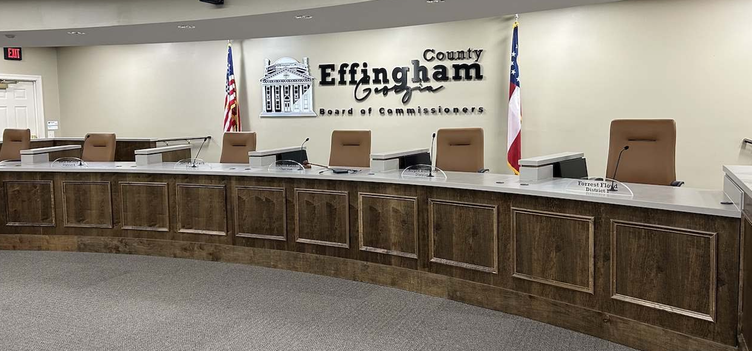
SPRINGFIELD, Ga. — Questions about transparency surrounding Effingham County’s handling of the proposed OpenAI data center are at the center of two resignations from the county Planning Board this summer.
Neal Kessler, of District 4, a Springfield resident and retired CPA who served on the planning board for more than a year and a half, said he resigned after learning about the proposed data center through phone calls and text messages while he was vacationing in North Carolina.
Lyndsay Smith, of District 5, an Effingham County resident and Realtor, also resigned from the planning board, effective July 31. Smith previously served on the county's Development Services Steering Committee.
The resignations received little public attention at the time. The County Commission voted unanimously Sept. 15 to appoint Jan Jackson to fill Kessler's seat, following a recommendation from Commissioner Beth Helmly. Commissioner Phil Kieffer, who nominated Smith to the planning board, has not yet recommended a replacement for her seat.
The vacancies are surfacing as county commissioners defend the process that led to data centers being allowed in heavy industrial zoning and consider new regulations for future data center projects.
“I think the main reason I resign is the lack of transparency in communication,” Kessler said.
Kessler said he was particularly concerned that he learned about the proposed data center only after the project was publicly announced, despite serving on a board that advises the county on development and zoning matters.
Smith did not cite the data center in her July 31 resignation letter, but she later connected her departure to the issue in a Sept. 14 Facebook post.
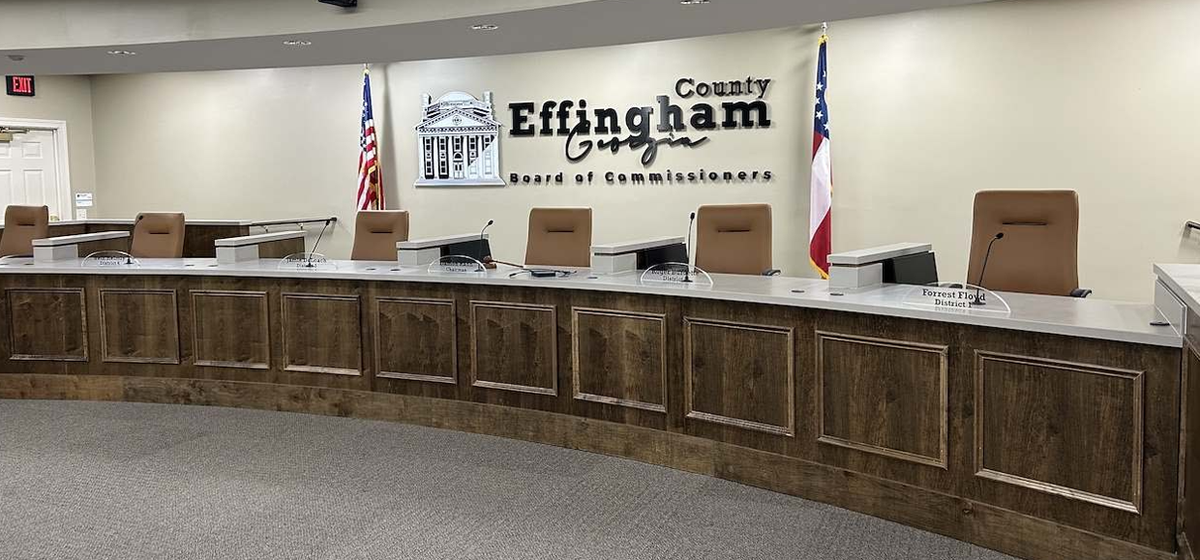
The planning board is the county's advisory body for land-use and zoning matters. It reviews rezoning and development requests and makes recommendations to the Board of Commissioners. Members are nominated by the commissioner from each of the county's five districts.
Kessler learned while on vacation
Kessler said he had no advance knowledge of the July 22 announcement by OpenAI and local officials of plans for a data center at the Savannah Gateway Industrial Hub.
“I had no idea,” he said.
Kessler was vacationing in the mountains of North Carolina when he began receiving calls and text messages asking what he knew about the project.
“What do you know about this data center?” people were asking him, he recalled. “And I said, ‘What are you talking about?’”
Kessler said he does not believe county commissioners or the Effingham County Industrial Development Authority were required to tell him about the project before the public announcement.
“It’s not like anyone had to tell me anything,” he said. “The board of commissioners is not required to tell me anything, and they’re not doing anything by not telling me, and the IDA certainly doesn’t have to tell me anything.”
But Kessler said he believed planning board members should have had some awareness of the project because of their role in reviewing development proposals and making recommendations to county officials.
“We’re supposed to kind of have an inkling of what’s going on,” Kessler said.
Kessler said his resignation was not necessarily a rejection of data centers or artificial intelligence.
“I don’t know if I’m against the data center,” he said. “I know we need it and I know that we need it in this world.”
He pointed to his own use of technology, including ChatGPT, as an example.
Instead, Kessler said his concern was whether people appointed to county boards have enough information to do their jobs effectively. He said he spent considerable time preparing for planning board meetings, reviewing agendas and development proposals.
“I spent a lot of time, a lot of hours, trying to do a good job,” he said. “It’s just more than just showing up at a board meeting.”
Kessler said commissioners had told him that while the planning board has only an advisory role, its work is important to the county's decision-making process.
“I just wish we had a little bit of teeth in the game,” he said.
Despite his concerns, Kessler said he enjoyed serving and was reluctant to resign.
“It’s something I hated giving up because I enjoyed serving on the planning board,” he said. “I really did.”
Smith raises steering committee questions
Smith's resignation letter was more general.
“It has been a privilege to serve on the Planning & Zoning Board,” Smith wrote. “I am grateful for the opportunity to have contributed to discussions and recommendations intended to thoughtfully guide the future growth of our county.”
Smith wrote that when she accepted the appointment, she believed she could play a meaningful role in shaping the county's future through “thoughtful planning and open collaboration.”
“After much reflection, I have decided that serving on the board is no longer the best way for me to contribute to the future of our county,” she wrote.
Smith later offered a more specific explanation on Facebook.
“I resigned from the Planning Board because … plot twist … I didn’t know they were planning a data center,” she wrote.
Smith also had served on the Development Services Steering Committee, a county advisory group that reviewed the county's development regulations and zoning classifications.
The committee's work included reviewing the county's zoning districts and Table of Permitted Uses, which lists what types of businesses and development are allowed in each zoning category.
Data centers were added as a permitted use in light industrial zoning in January 2025 and in heavy industrial zoning in April 2025.
Smith said data centers were never discussed during the committee's meetings she attended.
She challenged comments by Commissioner Jamie DeLoach that only one former steering committee member has said data centers were never discussed.
Smith said three other former committee members have provided her written statements saying they do not recall data centers being discussed. She also said she spoke with another person who attended a meeting where industrial uses were discussed and who had the same recollection.
That would make five people, including Smith, who she says do not recall any discussion of data centers.
Smith said the distinction matters because the committee was reviewing the zoning regulations and permitted-use list under which data centers were ultimately allowed in heavy industrial zoning.
County says data centers were in the records
Kieffer, who nominated Smith to the planning board, said county records show Smith and other members of the steering committee were provided information that included the Table of Permitted Uses.
Kieffer said staff sent an email to the steering committee in March 2025 with the Table of Permitted Uses attached. Staff also sent the table to the planning board in June 2025. Smith was copied on both emails.
The table identifies data centers as a permitted use in heavy industrial zoning, Kieffer said.
“Between the two emails, it proves that one of two things are true: either she missed it twice or she didn’t care,” Kieffer wrote in an email to Herald. “But she cannot claim that was ‘slipped in.’”
The records establish that the table was provided to the groups. They do not establish whether data centers were discussed during steering committee meetings.
Smith maintains that receiving the table does not establish that she or the committee understood that data centers were being added as a permitted use.
“I was never informed that data centers were being added, and I was never told that they would be permitted by right, meaning no public hearing before one could be built,” Smith said in a response to Herald.
“Receiving an attachment by email is not the same thing as discussing a specific land use amongst a committee, debating it, understanding that it had been newly added, or knowingly recommending its inclusion,” she said.
Smith said she does not recall data centers being raised for substantive discussion before the steering committee.
“I have not seen a Steering Committee email in which the addition of data centers was specifically identified, explained, questioned, or discussed in the BODY of the email,” she said.
Kieffer said Smith never told him she was resigning because of the data center.
“I only know what was written in her email of resignation,” Kieffer said in an interview.
Kieffer said he does not believe Smith participated in any vote directly involving the Project Camellia property because the property had already been zoned industrial.
No replacement selected
Kieffer said Smith served on the planning board for less than two years and that he had nominated her to the board.
He said several people have expressed interest in filling the vacancy, but he has not recommended a replacement.
“I would rather spend a little more time on it and not rush into it,” Kieffer said.
The resignations come as commissioners review proposed changes to the county's data center regulations.
At a Sept. 15 work session, commissioners discussed potential requirements involving data center locations, noise, lighting, buffers, generators, water and sewer demand, traffic and decommissioning. No action was taken.