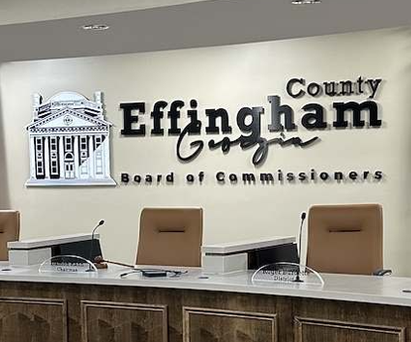

SPRINGFIELD, Ga. — A group challenging the proposed OpenAI data center in Effingham County is asking Superior Court Judge Michael Muldrew to rule in its favor without a trial, arguing the Effingham County Industrial Development Authority violated state laws requiring government meetings and records to be accessible to the public.
In a motion filed Oct. 27 in Effingham County Superior Court, the plaintiffs ask the judge to invalidate agreements tied to the project, alleging the authority failed to provide adequate public notice of a meeting, discussed an agreement in a closed session and did not make land-sale agreements available through public-records requests.
The motion seeks a summary judgment, which allows a judge to resolve a case without a trial when the applicable legal standard is met. The filing represents the plaintiffs’ arguments, not a ruling by the court.
The Herald requested comment from the Effingham County Industrial Development Authority and Oliver Maner LLP, which represents Octans GA LLC, the OpenAI affiliate named as a defendant. Neither had responded by publication time. This story will be updated if responses are received.
William Snow, an attorney with the Southern Environmental Law Center representing the plaintiffs, said the motion provides additional details and evidence supporting arguments already made in the lawsuit.
The plaintiffs — One Hundred Miles Inc., Amy Collins, Robert Collins, Elizabeth Fisher, Crystal Hayes and Manjusha Sheobaran — contend the authority’s actions violated Georgia’s Open Meetings Act and Open Records Act. They want the judge to rule that agreements tied to the land sale and data center project are not legally valid.
If the judge grants their request, the ruling could invalidate agreements tied to the land deal. The motion does not, by itself, halt the data center project or invalidate other approvals.
Questions about notice
The plaintiffs contend the authority violated the Georgia Open Meetings Act in connection with a July 21 meeting.
According to their brief, the authority’s regular meeting was scheduled for July 16 before being rescheduled to July 21. Georgia law requires regular meeting schedules to be posted at least one week in advance. For other meetings, the law generally requires at least 24 hours’ notice to the county’s legal newspaper or another qualifying newspaper.
The plaintiffs allege the Effingham Herald was notified of the change on July 16 and the revised meeting notice was posted only five days before the meeting. They also contend the authority failed to update its website with the new date.
Snow said the seven-day notice requirement is clear.
“The Georgia Open Meetings Act sets very clear requirements for the amount of time that must be provided for notice before a public meeting,” Snow said. “There are no great secrets about the requirements the development authority had to adhere to. And it’s also no secret that they did not meet those requirements.”
Snow said the notice issue should be relatively straightforward for a judge to resolve.
The plaintiffs further argue the meeting agenda did not adequately inform the public that the authority would discuss the proposed OpenAI data center. The project was identified by the code name “Project Gateway,” according to the filing.
The authority discussed the agreement behind closed doors for more than an hour, according to the plaintiffs’ brief. The agreement outlined the terms of the proposed data center project.
The plaintiffs argue the legal provision allowing certain real estate discussions to take place privately did not apply because the agreement was not itself a contract to buy, sell or lease property.
According to the plaintiffs’ filing, the agreement included nearly $900 million in tax abatements in exchange for investment and employment commitments.
Land agreements challenged
The plaintiffs also challenge how agreements involving the project’s approximately 1,440 acres were handled.
According to the brief, land-sale agreements were signed May 14 and July 7 through Savannah Industrial Development LLC, which acted as a representative for the authority.
Snow said Savannah Industrial Development has served as the authority’s agent under an agreement dating to 2016, giving the private entity the ability to sign documents and conduct business on the authority’s behalf.
The plaintiffs argue that using a private representative did not exempt the authority from state open-government requirements.
At the July 21 meeting, the plaintiffs contend, the authority authorized its chief executive officer to sign documents transferring the land without publicly identifying the property or disclosing the terms of the sale.
The property was transferred July 24, according to the filing.
The plaintiffs argue the authority’s actions violated the Open Meetings Act because the public was not given the opportunity to learn about and observe the decisions surrounding the transaction.
Dispute over public records
The lawsuit also includes a claim under Georgia’s Open Records Act.
The plaintiffs say their attorneys requested copies of the land-sale agreements Aug. 18, Aug. 26 and Aug. 31. According to the brief, the authority indicated the documents were held by its private representative, which declined to provide them.
The plaintiffs argue the authority remained responsible for obtaining and releasing public records related to its business, even when those records were held by a representative. They are asking the court to order the authority to release the agreements.
“Really all that the plaintiffs are asking for is that the development authority be held accountable for not doing the public’s business out before the public’s eye,” Snow said.
What happens next
The plaintiffs’ motion asks the court to resolve their claims without a trial, arguing the facts are not in dispute and the law supports their position.
The authority and Octans GA LLC have the opportunity to respond to the plaintiffs’ arguments.
Snow said the defendants’ response to the summary judgment motion is separate from their response to the original complaint. The defendants received an extension until Nov. 12 to respond to the complaint.
A request for a ruling without a trial does not mean the judge has accepted the plaintiffs’ claims. The court could grant or deny the request in whole or in part, depending on the evidence, the applicable law and the arguments presented by both sides.
The case is the second lawsuit filed in Effingham County Superior Court over actions connected to Project Camellia. In September, three county residents sued to overturn a zoning ordinance approved Aug. 4 that allows data centers in industrial areas. They allege the county failed to hold public hearings required under its zoning rules and state law. Unlike this case, which challenges the Industrial Development Authority’s handling of the land deal and related agreements, the earlier lawsuit focuses on the county’s zoning process.