Since Project Camellia was announced, Effingham County residents and local environmental groups have raised concerns about its potential effects on the environment, particularly noise, air, water and wildlife.
We live in an area with a dynamic climate, sensitive hydrology and rich biodiversity. A 1,400-acre data center campus would represent a significant change to the landscape and could have substantial environmental effects.
For specific answers, I attended the OpenAI open house on July 23 and spoke directly with officials about environmental concerns. Based on those conversations with OpenAI officials and concerned residents, along with further research, these are some of the potential environmental consequences of Project Camellia.
Noise
Noise pollution from Project Camellia is a major concern for Effingham County residents. Hyperscale data centers can be noisy neighbors. The industrial equipment must be cooled by massive HVAC systems and thousands of fans that run 24/7, potentially creating a constant, low-frequency hum that could travel for miles.
Prolonged exposure to noise can affect human health, including sleep and stress levels. That is a particular concern for residents of Belmont Glen, who would live next door to the proposed site.
The county ordinance restricts Project Camellia’s noise production to 50 decibels or below at the property line, as loud as a normal conversation. An OpenAI official said the company plans to reduce noise using “existing buffers” but did not specify how much those buffers would reduce the decibel level.
The question for nearby residents is not simply whether the project can meet the county’s noise standard at the property line. It is how much noise they will experience in their homes and neighborhoods around the clock.
Air
The project also raises questions about air quality and greenhouse gas emissions.
Georgia Power has entered into a 25-year agreement with OpenAI to provide 3.2 gigawatts of electricity for Project Camellia, enough to power 2.25 million homes.
To meet growing demand from data centers, Georgia Power plans to expand Plant McIntosh, the state’s fourth-largest carbon dioxide emitter, with two new combined-cycle units capable of producing 1.6 gigawatts. According to estimates presented about the expansion, it could emit 5 million tons of greenhouse gases per year and 63,000 pounds of hazardous air pollutants per year.
The Georgia Environmental Protection Division is hosting a virtual public meeting via Zoom on Aug. 14 from 6 to 7:30 p.m. for the draft air permit required for this expansion. To join, visit gaepd.zoom.us for instructions.
Diesel generators are the preferred backup power source for data centers. Diesel combustion directly affects local air quality by emitting pollutants such as nitrogen oxides and fine particulate matter.
The extent of the project’s impact on local air quality will depend on how the facility is designed, how often the generators operate and what emissions controls are required. Still, adding a major industrial facility to the county raises legitimate questions about its potential effect on air quality and respiratory health.
Water and wetlands
Water is another major concern.
Data centers can require significant amounts of water for cooling. OpenAI has said water usage for Project Camellia will be “minimal” because the facility will use a closed-loop cooling system with recirculating water.
The project also is expected to use surface water from the Savannah River through a new raw water system for the county. However, Project Camellia has not disclosed a specific water withdrawal amount.
A portion of Effingham County is under water withdrawal restrictions, particularly following this year’s drought. Any additional industrial use could put more pressure on the county’s water supply, even with conservation and efficient cooling systems.
The closed-loop system also carries “a risk of pipes failing and breaking,” according to an OpenAI official at the open house. The official said that, if a break occurred, special sensors would detect leaks, followed by a procedure to isolate and clean the leak.
OpenAI officials said no contaminated water would be discharged into stormwater, soil or streams. Even so, the possibility of a leak raises questions about how quickly one could be detected and contained and what safeguards would protect nearby wetlands and waterways.
Headwaters and wetlands are important to Effingham County. They provide drinking water, support agricultural irrigation, help sequester carbon and provide critical wildlife habitat. They also serve as important areas for biodiversity.
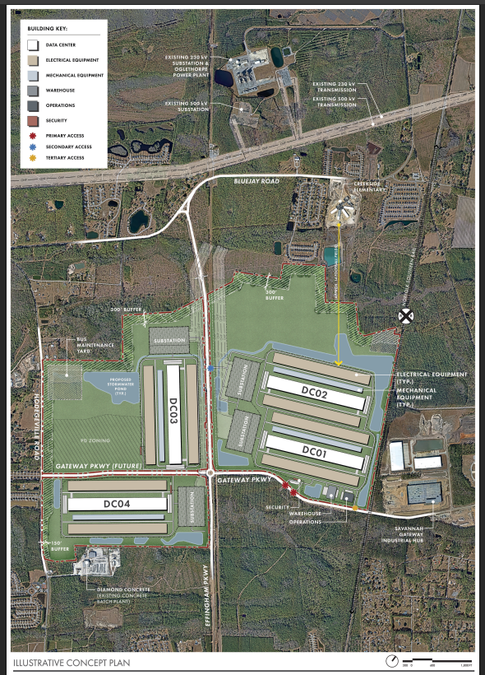
Based on the illustrative site plan, Project Camellia would be built on or near wetlands that feed into Dasher Creek and Sweigoffer Creek, two major tributaries in Rincon. Roughly 1,000 acres of wetlands could be converted to impervious surfaces, with 11 retention ponds included in the site plan.
The conversion of that much land could affect the area’s watersheds by increasing stormwater runoff and potentially contributing to erosion and flooding. How significant those effects would be will depend on the final site design, drainage plans and mitigation measures.
Wildlife
The proposed Project Camellia site encompasses about 1,600 acres of wet pine flatwoods, an ecosystem that provides habitat for numerous species, including 120 bird species and the gopher tortoise.
The construction of a four-building data center campus would significantly alter that natural ecosystem and would displace wildlife. It also would reduce tree cover and natural green space that provide benefits for both wildlife and people.
According to an OpenAI official, the company used the Information for Planning and Consultation, or IPaC, tool to identify threatened and endangered species and suitable habitats. However, specific species identified through that process and detailed mitigation plans were not disclosed at the open house.
One concerned resident also raised questions about the potential negative effects of electromagnetic fields, or EMFs, on insects such as bees. Data centers and their associated electrical infrastructure produce non-ionizing electromagnetic fields. Research into environmental EMF exposure is ongoing, and the potential negative effects on pollinators and other wildlife remain an area of scientific study.
When asked about the concern at the open house, the OpenAI official said, “There is no EMF scope.”
That answer leaves an important question unanswered: What, if any, assessment will be conducted to determine whether the project’s electrical infrastructure could affect pollinators or other wildlife?
Questions remain
As the project moves forward, the most important environmental questions are not necessarily whether every potential impact can be eliminated. Large industrial developments inevitably change the landscape around them.
The question is whether those changes can be fully understood, measured and mitigated before construction begins.
Effingham County has a responsibility to protect our natural and cultural heritage that make this community worth living in. That means residents should have access to detailed information about the project’s water use, noise levels, air emissions, wetlands impacts, stormwater management and wildlife protections.
Project Camellia is being presented as an enormous economic opportunity for Effingham County. But economic development and environmental stewardship do not have to be opposing goals. Before decisions are made that could affect Effingham’s land, water, air and wildlife for generations, residents deserve the opportunity to understand the risks, examine the evidence and have their concerns addressed.
As a lifelong Effingham County resident and the founder of Scott’s Wild Bird Preserve, I believe protecting nature and wildlife is not an obstacle to progress. It is a crucial part of protecting the identity and future of this community.
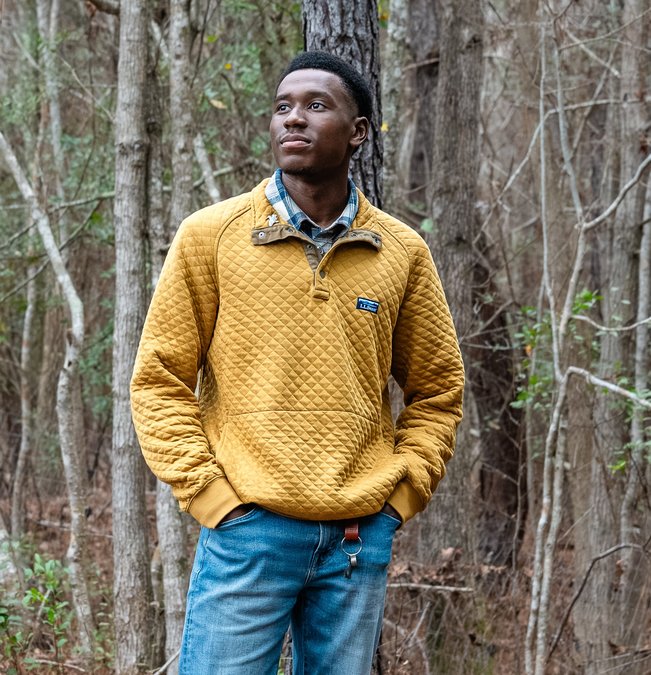
— Isaiah Scott is a South Effingham High School graduate, Cornell University-trained ornithologist and founder of Rookery Roots Conservancy and Scott’s Wild Bird Preserve in Rincon.