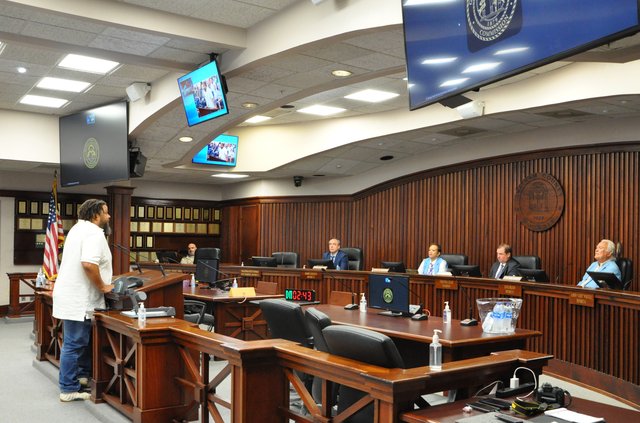
SAVANNAH — The Georgia Public Service Commission brought the debate over OpenAI's planned 1,400-acre data center campus in Effingham County to Savannah on Tuesday, as commissioners faced questions about who regulates the project, who pays for its massive power demands and what protections are in place for Georgia Power customers.
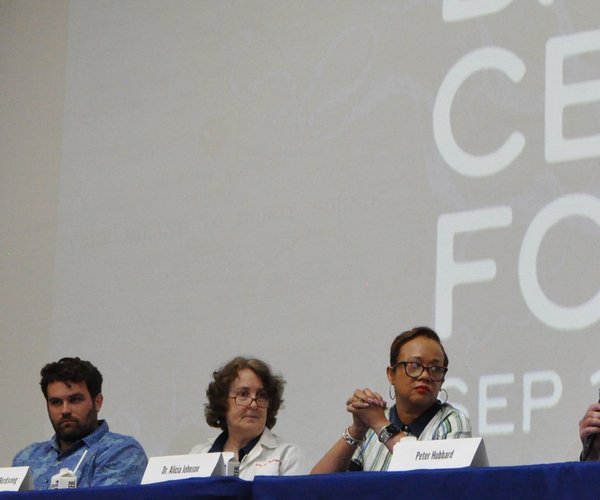
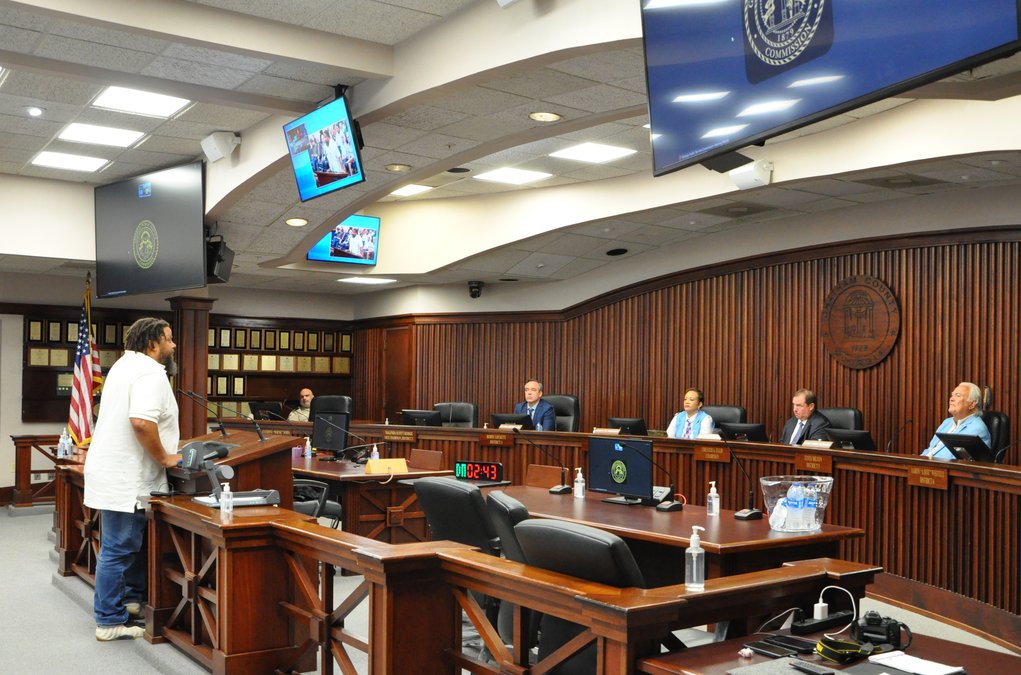
The commission held its regular administrative meeting in the Chatham County Board of Commissioners chambers before hosting a two-hour town hall, where residents from across southeast Georgia pressed commissioners and utility officials for stricter oversight of rapidly expanding data center development.
It was the first time in nearly 20 years that the PSC had held an administrative meeting outside Atlanta.
“What you're dealing with now — and what we're all dealing with, quite frankly — and what we've been dealing with at the commission for about three years now is these large-load customers and how we deal with that from a regulatory perspective and working with our regulated utilities in the state,” PSC Chairman Jason Shaw said.
Regulating the power
The Georgia Public Service Commission is the regulatory body for Georgia Power and other state utility companies.
The PSC opened the town hall with a background on how it has been handling “large-load” contracts such as OpenAI's. The contracts cover customers that require unusually large amounts of electricity.
Tom Bond, director of utilities for the PSC, said the surge in data center demand has prompted the commission to establish new requirements for large-load contracts. Bond said the PSC told Georgia Power in early 2025 that it could not sign new data center contracts until the commission established rules for reviewing them.
Under that framework, large-load contracts must be submitted to the commission for review. The contracts must include provisions designed to protect other Georgia Power customers, including long-term commitments, minimum bills, upfront payments for certain infrastructure and financial protections if a customer ends the contract early.
The OpenAI agreement, filed with the PSC in July, calls for a 25-year term and 3.2 gigawatts of demand. Georgia Power has said OpenAI will pay the full infrastructure and electric-service costs associated with the project and has agreed to provide up to 1,000 megawatts of flexible demand response during periods of high demand.
Bond said PSC staff negotiated two additional protections into the agreement.
If OpenAI ends the contract early, Georgia Power cannot pass the resulting costs on to its regular residential, commercial or industrial customers. Any attempt to recover those costs would have to be approved by the PSC and would first be charged to other large-load customers, according to Bond.
The company also agreed to increase a previously established customer benefit from $8.50 to $15 per month for typical residential customers for 2029 through 2031, according to Bond.
Questions over the contract
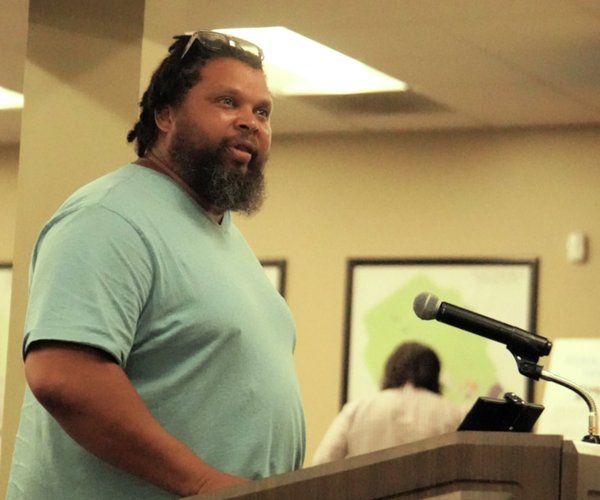
The PSC met in front of a full house, with Georgians from across the Southeast attending to listen or address the commission.
Several public commenters pushed for the PSC to reveal the full OpenAI and Georgia Power contract. The contract was released with every page fully redacted, with Georgia Power citing trade-secret protections.
“Georgia Power is the most insulated company that’s out there. They don’t respond to their customers,” Donna McLaurin, a public commenter, said. “All of the questions we have about this contract, we're not going to get answers from Georgia Power. We're not going to get it from the AI company.”
Georgia Power representatives answered some questions at the end of the town hall. OpenAI officials were also acknowledged in the room, but none stood up to address the public's questions or concerns.
Effingham County officials were also absent from the meeting room, a detail that did not go unnoticed by public attendees, many of whom were there to raise concerns about OpenAI's planned campus.
Local rules, state oversight
PSC Commissioner Alicia Johnson emphasized that the PSC does not oversee the underlying agreement between Effingham County and OpenAI.
Johnson said the commission regulates the electric-service portion of the project, including the amount of power and infrastructure involved and who pays for it. Local governments and economic development authorities, she said, handle decisions about where projects are built and the local agreements that govern them.
Johnson said she provided Effingham County officials with a template for stronger local ordinances in July addressing issues such as noise, water stewardship and decommissioning.
“We did protect you in what we could protect you from,” Johnson said. “What I'm encouraging you to do is to charge the people that you elected in your county who are responsible for all of the items that you have laid out that you charge them with the same fervor to represent your interest in your county as well.”
The distinction between what the PSC controls and what remains in the hands of local governments became a recurring issue during the town hall.
Transmission concerns
Several attendees also pushed back at the PSC over Georgia Power grid expansions that include fossil fuels they said are harmful.
“We don't need to use dirty, polluting fuels,” Charles Eyler, a public commenter, said. “They are heating up the earth. Georgia Power is heating up the Earth and charging us for air conditioning. The world has changed. Georgia Power is stuck in the past and resisting important changes.”
Other speakers asked about transmission infrastructure and eminent domain.
Gwen McLee, a Savannah resident who owns property in Emanuel County, neighboring Bulloch County, said she learned that a proposed transmission route could cross her property. She questioned how routes are selected and who ultimately approves them.
“It will destroy our entire property,” McLee said to the commission. “We are very concerned. I don't feel like I've been able to get a lot of information. I don't even understand who approves transmission lines.”
PSC Commissioner Peter Hubbard acknowledged that transmission-line siting presents a regulatory gap. He said the PSC generally does not decide what happens when a utility and a landowner cannot agree on a transmission-line route. Those disputes can move into eminent-domain proceedings in superior court, outside the PSC's jurisdiction.
Georgia Power has several major transmission projects scheduled around the state, including in Effingham County.
Construction opportunities
Of the 22 Georgians signed up to speak during public comment, just two expressed a potential benefit from data center development: construction opportunities.
Both work in construction and said large data center projects could create jobs and opportunities for local workers.
“If these projects come, they should be built by Georgians and we want to build,” Brett Hulme said.
Many other public commenters called on the PSC to vote “in line with” Georgia's residents.
“Don't forget that you're here to serve the people and you're elected by the people,” Corey Foreman, a Bryan County resident, said. “You do not work for Georgia Power. You do not work for any other electric company, gas company, or utility company in the state.”