SPRINGFIELD, Ga. — Effingham County voters will decide Nov. 3 whether to speed up property tax relief for homeowners and renew a sales tax that helps pay for county projects.
The two referendums address different needs, but they are connected. One would give the county another way to reduce property taxes on qualifying homeowners. The other would help pay for public safety facilities, courts, parks and other projects without relying as heavily on property tax revenue.
County Manager Tim Callanan said both measures affect the county’s ability to meet its goals for tax relief and public services.
Here’s what’s at stake:
A faster path to relief
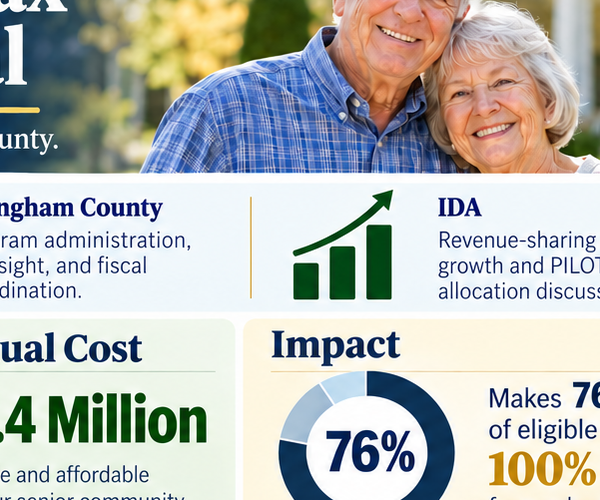
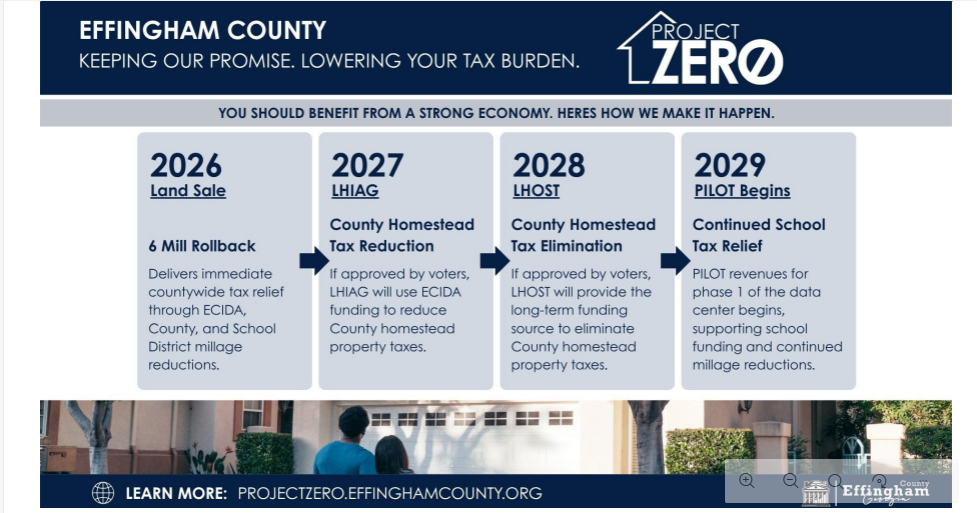
The first referendum would allow Effingham County to move faster on Project Zero, its plan to eliminate the county government’s share of property taxes on qualifying homes.
The goal is to phase out those county taxes over three years. The November referendum would authorize the Local Homeowners Incentive Adjustment Grant, or LHIAG, giving the county another way to target tax relief to eligible homeowners.
Callanan said the county wants to help qualifying homeowners first rather than spread tax relief across all types of property, including warehouses and other industrial properties.
“This is the most aggressive way that we can provide property tax relief, and the quickest way we can provide it,” Callanan said.
The referendum would not immediately eliminate property taxes. Instead, it would let the county move faster toward its goal.
The plan also would not eliminate school district property taxes. Those taxes would remain, even if the county eventually eliminates its portion for qualifying homes.
How the money works
The county received $20 million through a land transaction involving the Effingham County Industrial Development Authority. But the county cannot directly use that money to issue property tax credits. It must be spent on capital projects, such as buildings and other major improvements.
The county already planned to use property tax revenue and money from its savings to help pay for those projects. By using the Industrial Development Authority money for eligible projects instead, the county can free up some of its other funds for property tax relief.
The money is not going directly from the land deal to homeowners. It is replacing money the county otherwise planned to spend on capital projects, allowing other funds to be used for tax relief.
Without approval of the LHIAG referendum, Callanan said, the county could pursue another step toward Project Zero next November through a separate tool called the Local Homestead Option Sales Tax, or LHOST. That could still move the county toward its goal, but it would delay the timeline.
Project Zero is focused on qualifying homesteaded homes, not every property in the county. Callanan said the county wants to reduce taxes for other property owners where possible, but eliminating property taxes across the board would mean large industrial properties could use county services and roads without paying those taxes.
What SPLOST pays for
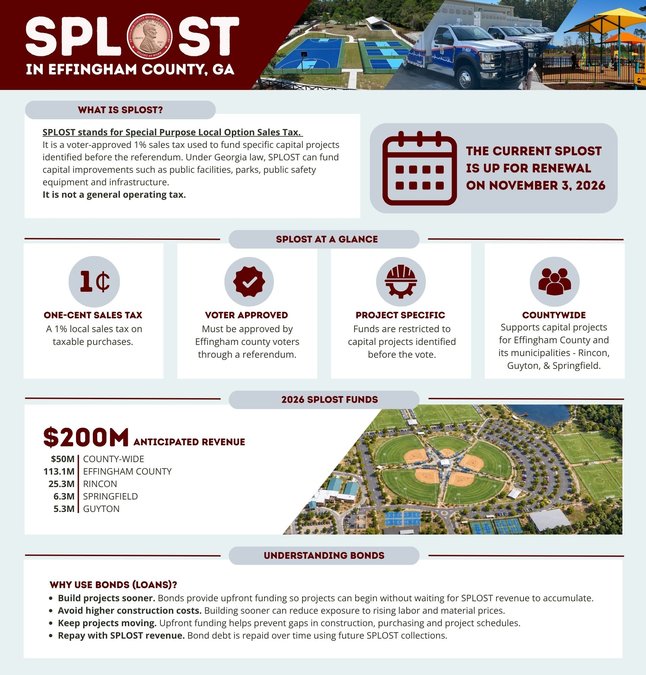
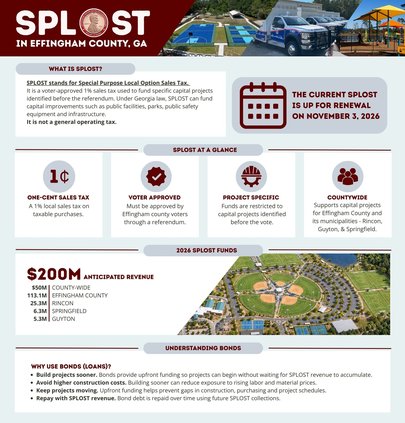
The second referendum asks voters to renew the county’s 1% Special Purpose Local Option Sales Tax, known as SPLOST, for another six years.
SPLOST is a sales tax used to pay for approved public projects. The tax is paid by shoppers and businesses, including industrial operations. That means the cost is shared more broadly than a property tax, which falls on property owners.
Callanan said SPLOST also gives voters a way to hold the county accountable. Before the tax is renewed, county officials must present a list of projects they plan to fund. They must then deliver on those commitments to maintain public trust when they ask voters to renew the tax again.
Among the proposed projects are a sheriff’s training center, a new magistrate court facility, a larger senior center and additional parks and recreation improvements.
The magistrate court facility would be built at the sheriff’s campus. Moving the court would also free space in the existing judicial center, where more courtrooms are needed.
The county’s current senior center has outgrown its space as participation has increased. The proposed expansion would provide more room for older residents to take part in programs and activities.
If SPLOST fails
Callanan said many of the proposed projects would be delayed if voters do not renew SPLOST. The county would have to stop or slow work and find other ways to pay for projects it still needs.
Some projects, including court and public safety facilities, would still need to be addressed. The county would have to find another funding source for them. Parks and other projects considered less urgent could be put off.
That could also affect the timing of Project Zero. Callanan said the county’s goals of reducing property taxes and paying for necessary projects can compete for the same funds.
If SPLOST fails, the county might have to stretch its plan for Project Zero from three years to as long as five years, he said. The exact timeline would depend on how the county chose to pay for essential projects.
Two separate decisions
The referendums serve different purposes. The LHIAG measure would give the county a way to speed up targeted property tax relief for qualifying homeowners. SPLOST would provide money for approved public projects over six years.
Neither vote guarantees that every goal will be met exactly as planned. The property tax referendum is one step toward Project Zero, while SPLOST would help the county pay for projects without putting as much pressure on other funds.
For voters, the decisions come down to two questions: whether to give the county another tool to reduce qualifying homeowners’ property taxes, and whether to renew a sales tax that helps pay for county facilities and services.