SPRINGFIELD, Ga. —Property tax bills are hitting mailboxes across Effingham County, and homeowners have until Dec. 16 to pay. With the county growing fast, many residents are seeing larger bills than expected. The reason? Your home’s assessed value may be rising faster than you think.
To make sense of it, we spoke with Neal Groover, Effingham County’s chief appraiser, and Daniel Rodewolt, tax commissioner.
Here’s a straightforward guide to how the county appraises homes and calculates property taxes.
Tax appraiser vs. tax commissioner
Before diving in, it’s important to understand the difference between the two offices that handle property taxes.
The tax appraiser determines the value of your home using market data, property characteristics, and appraisal software — in other words, they calculate the number your taxes are based on.
The tax commissioner collects your taxes, sends the bills, sets payment deadlines, and administers exemptions or relief programs such as the homestead exemption.
Confused homeowners frequently call Rodewolt’s office to complain about their tax bills. “Don’t shoot the messenger,” he joked. “I just send the bills out and collect.”
Think of the appraiser as the scorekeeper who calculates property value and the commissioner as the referee who collects and manages payments.
How market value drives your assessment
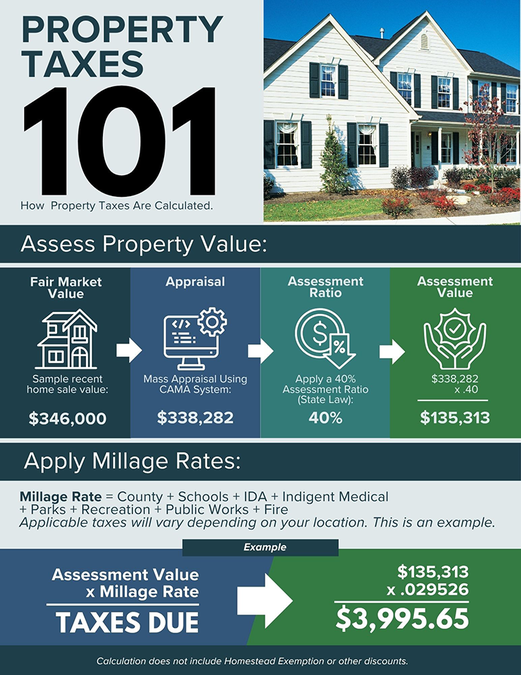
The county starts with your home’s market value, which is based on recent home sales in your area. The county is always a year behind, so your 2025 assessment is based on 2024 sales.
For example, if a 1,500-square-foot home was listed at $325,000 in 2024 but sold for $350,000, that sale price becomes the basis for its 2025 assessment.
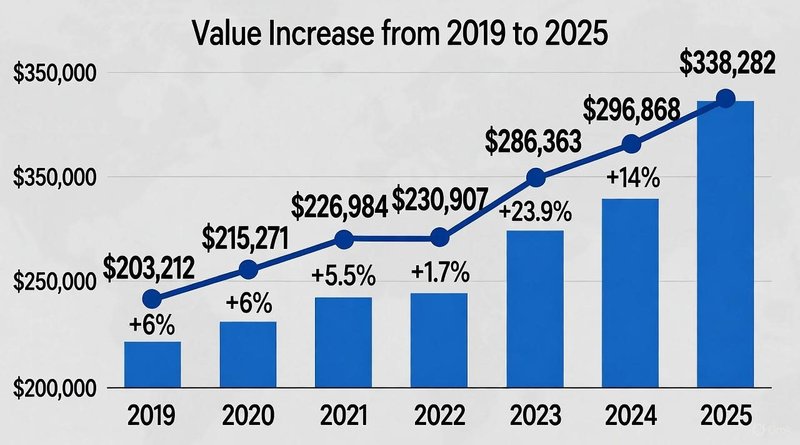
Groover explained why values have climbed so quickly: “The housing market took off like a rocket because Effingham County stayed open during COVID. Even the schools stayed open. People began moving here from all over the country — California, Oregon, Washington, New York. Land in Georgia is cheap, and the secret got out.”
Mass appraisal vs. individual appraisal
Most people think of an individual appraisal, where a licensed appraiser inspects a single property. The county does it differently. Mass appraisal is a big-picture approach, valuing thousands of homes at once using neighborhood trends, property size, age and condition. This ensures fairness across the county.
A fee appraisal is a one-on-one evaluation used by banks or real estate agents when buying, selling or refinancing a home.
Groover explained the difference this way: “We think about the big picture — the market as a whole. We paint with a broad brush, and other appraisers use a fine paintbrush.”
CAMA: The computer system behind your assessment
The county uses CAMA, or Computer-Assisted Mass Appraisal, software to calculate property values efficiently. The system factors in cost tables to estimate how much it would cost to rebuild your home, depreciation schedules to account for wear and tear, land value tables for location and lot size, and market adjustment factors to align values with sales trends.
Groover described it like this: “We have schedules and tables built into our system. It’s like a huge Excel sheet.” After the computer generates preliminary values, appraisers compare them to actual home sales to make sure the numbers reflect reality.
Using median home sales to benchmark values
Effingham County also uses the median sale price, currently around $300,000, to gauge typical home values. The median avoids the extremes of very high or very low sales, giving a realistic benchmark.
“The median helps us understand what a typical home is selling for,” Groover said. “It’s less affected by extremely high or low sales than an average would be.”
Quality and condition affect your taxable value
Homes are graded based on construction quality, materials and overall craftsmanship. Average homes use typical materials and finishes. Above-average homes feature higher-quality materials or design, while high or excellent homes are top-tier, custom designs.
“We have field appraisers who go out and inspect new homes to determine quality grading,” Groover said. “If a home is taken care of, its depreciation would be less.”
He added that the appraisal team can’t inspect every home each year. “It might be five years before we get around to your property. There are 33,258 total parcels in Effingham County. We can’t put eyes on everyone but try to appraise each property every three to five years.”
Georgia’s 40% rule: How your taxable value is calculated
In Georgia, homeowners are not taxed on the full market value of their property. Instead, property taxes are based on 40 percent of a home’s fair market value.
For example, a $300,000 home has a taxable value of $120,000. Using the county millage of 5.596, the school millage of 18.45, and an additional 5.48 mills from other local taxing authorities, the total property tax would be approximately $3,580.
This approach, based on a fraction of the market value, helps keep property taxes predictable and consistent for homeowners across the state.
How to limit your property taxes
There are a few ways to keep your property taxes in check. The homestead exemption locks in your home’s taxable value at purchase or residency. Even if your home’s market value rises, your taxable value can increase by only 3 percent per year.
Rodewolt added another tool: “We’re going to push for a FLOST referendum in 2026. FLOST is specifically designed for tax relief. It’s a 1-cent sales tax, and the money will be used to lower the county’s millage rate.”
Homeowners who believe their assessed value is too high can also file an appeal. There’s a 45-day appeal period each year to challenge the fair market value assessment; this year’s window closed on Aug. 24.
Check your escrow: insurance rates can affect your tax bill
Homeowners who pay property taxes through an escrow account should keep an eye on their homeowners insurance rates. Lenders often collect your property taxes along with insurance payments in escrow and pay the bills on your behalf.
If your insurance premium increases, your lender may raise your monthly escrow payment to cover the higher cost — which can make it feel like your property taxes went up, even if the tax amount hasn’t changed. Rodewolt recommends reviewing your escrow statements each year to understand what portion of your payment goes toward taxes versus insurance. Staying on top of these changes can prevent surprises when your lender adjusts your monthly payment.
Bottom line
Property taxes in Effingham County may feel complicated, but the process is designed for fairness and consistency. Mass appraisal looks at your neighborhood as a whole. CAMA software calculates values using cost, depreciation and land tables. Median sales and market trends adjust the values. Quality, condition and exemptions affect the final taxable value.
Understanding how your property is assessed helps you make sense of your tax bill — and take advantage of the tools available to manage it.