RINCON, Ga. — Rincon could soon send homeowners something they haven’t received from the city in nearly 30 years: a property tax bill.
City Council is considering a 2.323-mill property tax rate that would replace the $240 annual fee property owners now pay through their water bills.
The change would give Rincon a more predictable source of revenue as the city grows. It also could allow the city to take part in a new property tax relief program if voters approve it in November.
The council held its first required public hearing Tuesday on the proposed millage rate, beginning the process of ending Rincon’s zero municipal property tax rate, which has been in place since 1998.
Mayor Kevin Exley said the city’s current system made sense when Rincon was much smaller. It makes less sense now.
Rincon had about 3,057 residents in 1998. Today, the city has about 13,000.
That growth has brought more demand for police, fire protection, roads, parks and other city services. Rincon also serves as an urban center for the county, with an estimated 35,000 to 40,000 people passing through the city each day.
The proposed property tax would replace the $240 fee, not add another source of revenue on top of it.
“We’re going to get the millage set to match that fee,” Exley said.
But how much individual property owners pay would change.
Under the current system, every property owner pays the same $240 annual fee, regardless of the property's value. Under the proposed system, the tax would be based on the taxable value of the property.
That means some homeowners would pay less than they do now. Others would pay more.
It also would mean Rincon’s large commercial properties would pay considerably more than they do under the current system.
Why change now?
City leaders gave several reasons for moving from a flat fee to a property tax.
A property tax would provide a more stable source of revenue as Rincon grows. It also would spread the cost of city services based on property values rather than charging every property owner the same amount.
And there is another reason that has become especially important: LHOST.
The Local Homeowners Incentive Adjustment Grant is a new program authorized by the Georgia General Assembly that could allow local governments to use surplus revenue or excess fund balance to provide property tax credits to qualifying homesteaded residences.
Effingham County commissioners voted July 28 to put the creation of the program before voters this November.
The program is part of the county’s broader Project Zero initiative, which aims to eliminate the county government’s share of property taxes on qualifying homesteaded properties.
Rincon, however, does not currently have a municipal property tax.
Exley said that creates a problem if LHOST passes.
The city would have no municipal property tax to offset unless it first establishes a millage rate.
If voters approve LHOST and Rincon adopts the proposed millage rate, Exley said qualifying homeowners could potentially have their city property taxes covered through the program.
That could mean homeowners receive tax relief while commercial properties continue paying into the city’s tax base.
“If LHOST passes, and I hope it does, for the first time in forever, LHOST will come over and it will pay our homestead taxes,” Exley said.
Exley also encouraged residents who qualify for a homestead exemption to make sure they have filed for one.
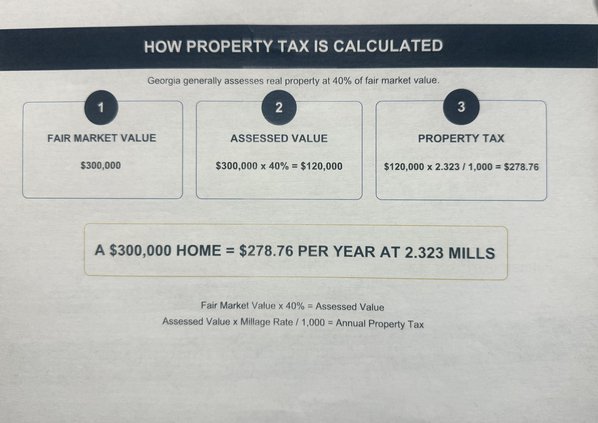
What would you pay?
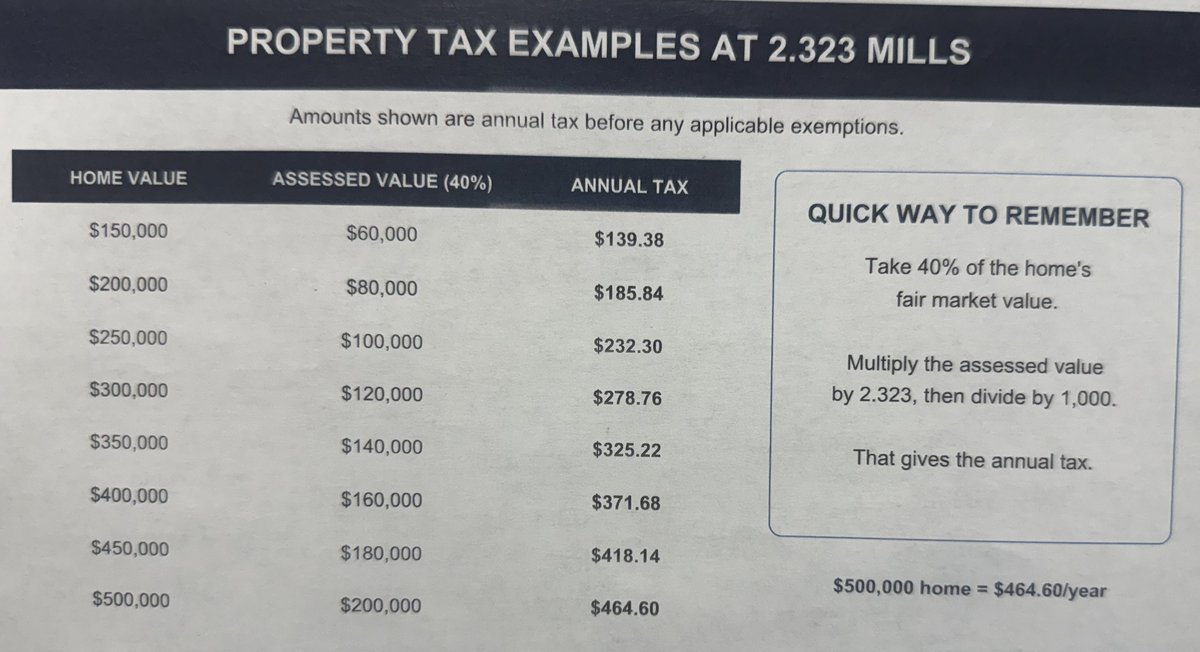
The 2.323-mill rate does not mean a homeowner would pay 2.323% of the value of the house.
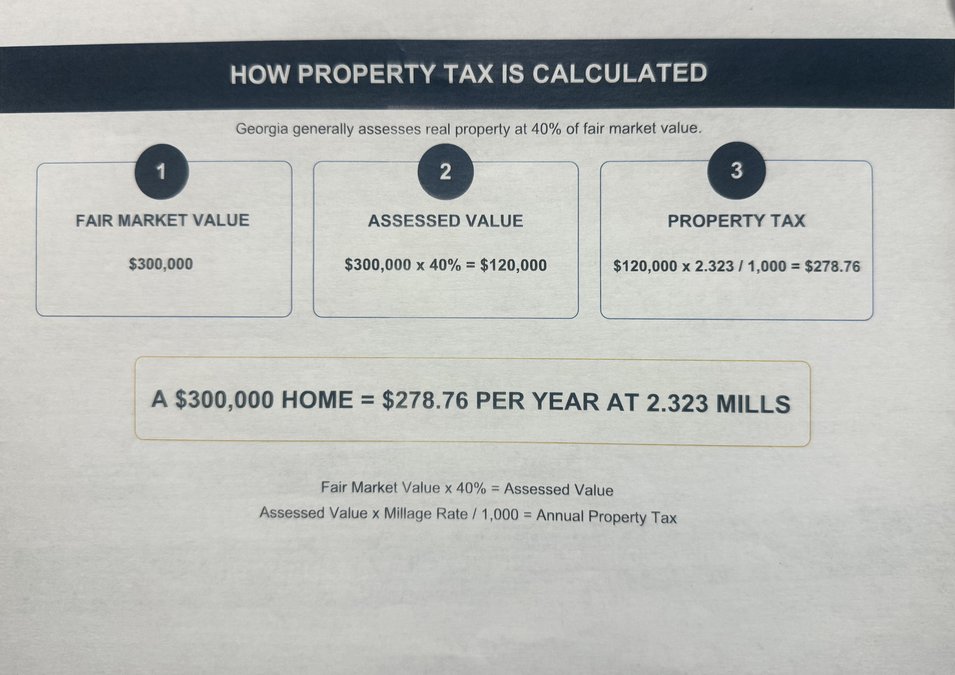
Georgia property taxes are based on 40% of a property’s fair market value.
City officials used a $300,000 home as the median property value for their calculations.
For a $300,000 home:
- Fair market value: $300,000
- Assessed value: $120,000
- Proposed city property tax: about $278
- Current annual fee: $240
- Difference: about $38
The difference would depend on the value of each property.
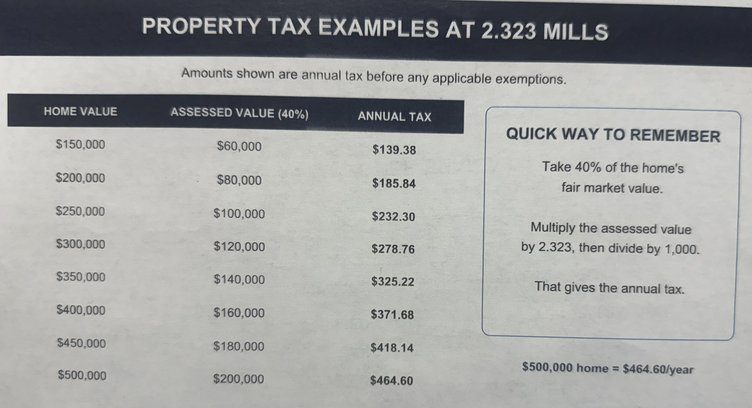
A $200,000 home, for example, would have an assessed value of $80,000 and generate about $186 in city property taxes — less than the current $240 fee.
Owners of higher-value homes would generally pay more.
The biggest change could come for commercial property owners.
Under the current system, a business pays the same $240 annual fee as other property owners, in addition to water and sewer charges.
Exley pointed to Walmart and Lowe’s as examples of large commercial properties that would contribute much more under a property tax because of their high assessed values.
“You can’t charge property taxes to businesses and not charge them to everybody,” Exley said.
Exley said the city initially considered a rate of about 4 mills but rejected it after determining it would generate more revenue than the city needs.
One mill represents roughly $688,000 in revenue based on the city’s current tax digest, he said.
The proposed 2.323 mills was designed to replace the revenue generated by the $240 fee.
Seniors worry about higher bills
The proposal drew concerns from residents who live on fixed incomes.
Anneliese Brandenburg, 85, who has lived in Rincon since 1982, brought her tax bill to the meeting to show council members how much she already pays in property taxes.
Brandenburg said she paid $576 in county property taxes, $1,700 in school taxes, $152 to the hospital authority and $205 to the industrial authority.
Her total was $2,685.
She questioned why the city could not instead require developers of warehouses and subdivisions to help pay for the cost of growth.
Brandenburg said seniors and veterans are already struggling with rising property taxes and other expenses.
“We are senior citizens and veterans, and some of them lose their house or have to sell it,” Brandenburg said.
Warren Myers, 72, also told council members that another property tax would be difficult for people living on fixed incomes.
Myers said his county property taxes have risen sharply in recent years. He also pointed to increases in homeowners insurance, auto insurance, homeowners association fees and groceries.
He estimated the proposed Rincon tax would increase his annual property tax bill by about $215.
“Just breaking the back of senior citizens, folks,” Myers said.
Myers said moving out of Rincon is not a realistic option for him.
“I cannot move out of Rincon,” he said. “I have no way to afford to be able to do that.”
Former councilman Patrick Kirkland asked whether the city had considered a senior exemption or some other break for residents on fixed incomes.
That question gets to the heart of the change facing the council.
The proposed system could lower the bill for some homeowners, particularly those with lower-value properties. But owners of higher-value properties would pay more, and some seniors said even a relatively small increase would be difficult to absorb.
Paying for a growing city
Rincon’s tax digest has more than doubled in the past five years, from about $328 million in 2021 to approximately $689 million in 2026.
Exley said the city has relied heavily on SPLOST and TSPLOST revenue to pay for roads, sidewalks, parks and other capital improvements.
Those sales taxes have helped Rincon keep up with growth, he said. But they are not intended to be the primary way the city pays for basic services.
“If it doesn't carry forward, it just resonates into a higher millage rate because you got to pay for it somehow,” Exley said.
Councilwoman Mona Underwood also defended the city’s spending on parks and other public facilities.
She said residents have seen Rincon improve significantly in recent years, but maintaining those improvements costs money.
“The new Rincon’s here, but it’s not going to be cheap,” Underwood said.
For city leaders, the proposed millage rate represents a fundamental change in how Rincon pays for city government.
“This is something that we should have done a long time ago,” Exley said.
The city will hold additional public hearings before the council can formally adopt the proposed millage rate.