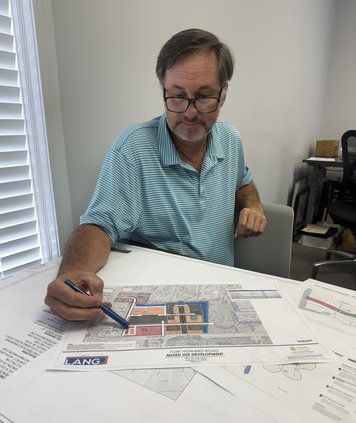
RINCON, Ga. — A 27-acre tract along Fort Howard Road could become a key piece of Rincon’s vision for a new mixed-use city center, with restaurants, retail, apartments, townhomes, pedestrian connections and potentially a grocery store.
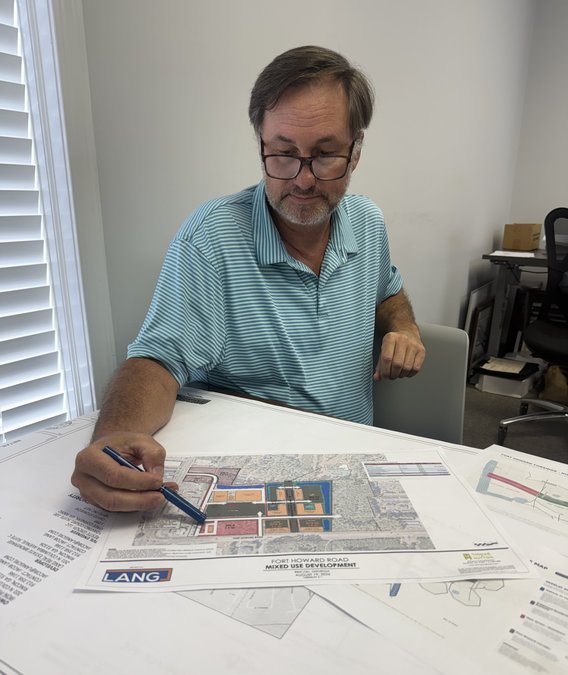
Jacob Lang, owner of Lang Commercial Real Estate, presented the preliminary vision Wednesday night during a Rincon City Council workshop, asking council members for guidance as he moves toward a master plan for the property.
Lang said he has 24 acres under contract to purchase, with another 3 acres under his control. The property is within the city’s Fort Howard Road Overlay District, but the final development will depend in part on the city’s plans for Fort Howard Road and surrounding properties.
“This is what I’m looking at because we could go in all kinds of directions,” Lang told the council. “I want it to be something I’m proud of. I live here.”
The proposal comes as the city is already investing in the future of the Fort Howard Road corridor.
Rincon recently purchased about 15 acres along Fort Howard Road for $2 million, with roughly 4 acres planned for a new Effingham County library and the remaining 11 acres designated for future commercial development.
The roughly 4-acre library site will be located between the entrances to Lost Plantation and Williamsburg subdivisions. The city plans to sell that parcel to Effingham County, which will develop the new facility.
The library site is part of a broader effort by city leaders to create a more walkable, downtown-style district along the corridor. The remaining city-owned acreage is intended for commercial development.
A city center
Lang said one of the first questions for the council was how the city envisions the area developing.
While the overlay district refers to a downtown-style development, Lang said he sees something more like a city center — a place where residents could park once, eat, shop and spend several hours without getting back into their cars.
Council members agreed.
“We don’t really have a city center in Rincon at all,” Mayor Pro Tem Mona Underwood said.
The council’s vision included restaurants and shops at street level, with residential development nearby. Members also discussed potential parks, civic space, bike connections and future road connections as part of a larger 25-year master plan.
The planned library could become one of the anchors of that emerging district.
Lang said the timing of the city’s plans for Fort Howard Road will be critical.
If improvements to Fort Howard Road are years away, he said, the development could begin with lower-density, single-story retail and other uses to establish momentum. If the road and surrounding infrastructure develop more quickly, the project could move sooner toward a more urban, pedestrian-oriented design.
Housing fills a gap
Lang and Ryan Thompson, land planning/landscape architecture manager at Thomas & Hutton, presented two preliminary concepts.
Both plans include retail and commercial buildings along the front of the property, with residential development farther back. The plans also include internal streets designed to create a more traditional grid, on-street parking and pedestrian connections.
A future connection could extend toward Weisenbaker Road, while another potential connection could tie the development into other nearby properties.
One version calls for rear-loaded townhomes. The other uses three-story multifamily buildings.
Thompson said the townhome concept would produce about 8.6 units per acre, while the multifamily portion could reach roughly 20 to 25 units per acre.
The difference is more than density.
During the discussion, Lang said the market has a greater need for one- and two-bedroom housing and that Rincon is losing residents ages 18 to 24.
“A lot more need,” Lang said when asked about the demand for smaller units. “Yes, we’re losing our 18 to 24 year olds.”
He also said seniors need more housing options and that rising debt-to-income levels are making homeownership more difficult in Effingham County.
Thompson said the demand for smaller apartments is not necessarily unique to Rincon.
When he moved to Savannah in 2002, he said, he was a young professional looking for a one-bedroom apartment.
Lang said his apartment mix would likely be heavily weighted toward one- and two-bedroom units, potentially about 85%, with fewer three-bedroom units.
The goal, he said, is to provide housing that supports commerce and gives residents reasons to get outside and use the city center.
Three stories, not four
Lang initially envisioned a denser project, including four-story buildings and as many as 600 apartments. But he said he backed away from that concept after considering market conditions and the fire and life-safety challenges associated with taller buildings.
The revised concept calls for three-story apartment buildings, which Lang said would provide the density needed to support the retail development while being easier to finance and operate.
The three-story option received the strongest support from the council, with members indicating they were comfortable with the additional height as long as the buildings are positioned so they do not loom over existing homes.
The change also would allow Rincon to add population through vertical development, an important consideration for a city with limited room to expand outward.
A grocery anchor
One of the largest potential pieces of the development is a grocery store.
The grocery concept is shown toward the rear of the property, with a large parking area, while buildings, landscaping and streetscape features along Fort Howard Road would create a more pedestrian-oriented appearance.
But that portion of the plan depends on what happens with wetlands on the property.
Lang said a wetland area currently occupies part of the site and that a determination later this year could establish whether it is jurisdictional and how much of the property can be developed.
“If it goes away, that really opens up the canvas for us,” Lang said.
Lang said his wetlands consultant believes there is a 50% to 70% chance the wetland could ultimately be determined to be non-jurisdictional.
Until that determination is made, the grocery store remains a possibility rather than a certainty.
Lang said his market research indicates residents are spending heavily on moderately priced sit-down restaurants, sporting goods and outdoor-related retail. He cited consumer spending, traffic patterns and credit-card data as some of the information used in his analysis.
He said the market also could support restaurants such as Newk’s or McAlister’s, as well as concepts similar to Academy Sports, Chipotle and Chicken Salad Chick.
Building a walkable district
The developer said the goal is to create more than a collection of individual businesses.
Lang said retail would be concentrated closer to Fort Howard Road, while residential development would transition behind it. The intent is for residents to be able to walk from apartments or townhomes to restaurants and shops.
Council members also emphasized connectivity, including possible roundabouts, sidewalks, bike facilities and connections to nearby roads.
The city’s recently acquired property and future library are part of that same vision, giving the Fort Howard corridor another potential destination and civic anchor.
Thompson said the street network may ultimately be more important than the individual buildings.
“The land planning and the plan is more important than the building,” he said. “You can tear buildings down, but usually the pattern of the plan has stayed the same.”
No action was taken Wednesday night. The workshop was held for discussion and feedback.
Council members will have an o